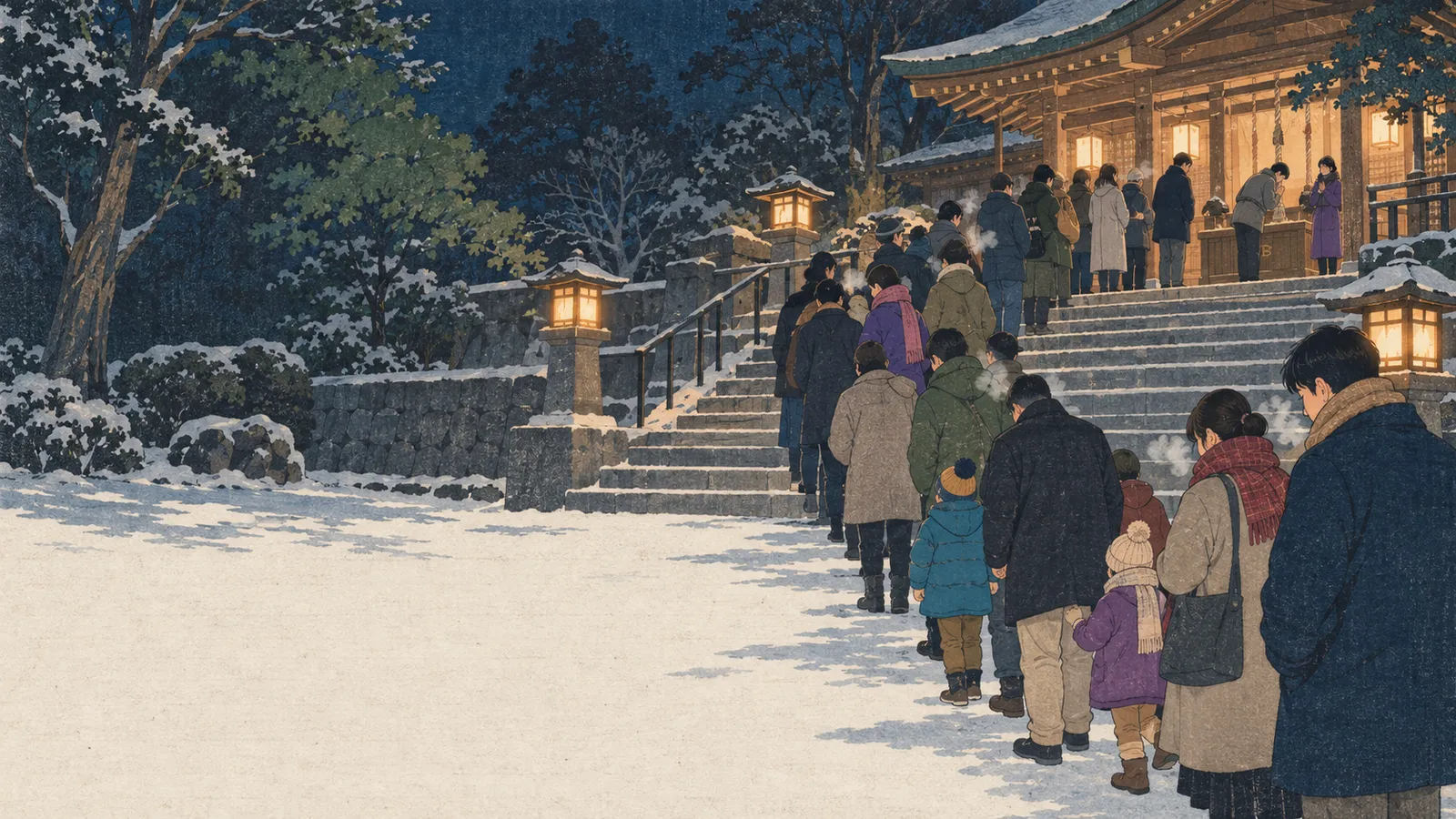
Ask a friend whether they are religious, and suppose they say no. Where would you expect to find them just after midnight on New Year’s Eve? At a party, probably. Asleep, maybe. Standing in a long, cold queue outside a place of worship, waiting to toss a coin and say a prayer? That would surprise you.
In Japan it would hardly surprise anyone. Most people there say they have no religion, and a great many of them start the year at a shrine anyway. It only looks like a contradiction because of one word.
The numbers
In a 2018 survey by NHK, Japan’s public broadcaster, 62 percent of people said they had no religion they believed in. And that was under a strict rule: people were told to leave out any religion they only meet at weddings and funerals.
Yet every January, shrines and temples fill up for the first visit of the year. At Meiji Jingu, a large shrine in central Tokyo, the New Year crowd in 2019 was put at about 3.18 million people.
If six in ten have no religion, who is in the queue?
What “religion” means in Japanese
The answer starts with the word on the form. The Japanese word for “religion” is shūkyō. It sounds old, but it only became the everyday translation of the English word in the Meiji era (1868 to 1912), the decades when Japan was opening up to the West and needed words for Western ideas.
The word that caught on came with a clear idea of what a religion is. Think of Christianity or Buddhism: someone founded it, it has a teaching to follow, and it has members who belong to it.
With that idea in mind, “Do you have a religion?” starts to sound like “Are you a member?” Most people at a shrine on New Year’s Day are not members of anything. They did not sign up, they do not attend every week, and nobody asked them to learn a creed. So when they say “no religion”, they mean something quite simple: I don’t belong to a group like that.
Like a tree in December
The visit itself fits that picture, and there is a comparison closer to home: putting up a tree in December. Plenty of people who never go to church still do it, and they don’t feel it says anything about their faith. For many in Japan, the New Year visit sits in the same place.
It also helps that, in the form people know today, the visit is younger than the shrines it fills. One older custom was for the head of a household to spend New Year’s Eve at the local shrine, praying through the night. The easy outing of today, with the whole family going to any shrine they like in the first days of January, spread from the late nineteenth century. Railways get much of the credit: new lines put famous shrines within a day trip, and the railway companies advertised New Year visits to fill their trains.
So part of what fills that queue is a holiday habit, with crowded trains and food stalls, laid on top of something older.
Two kinds of religion
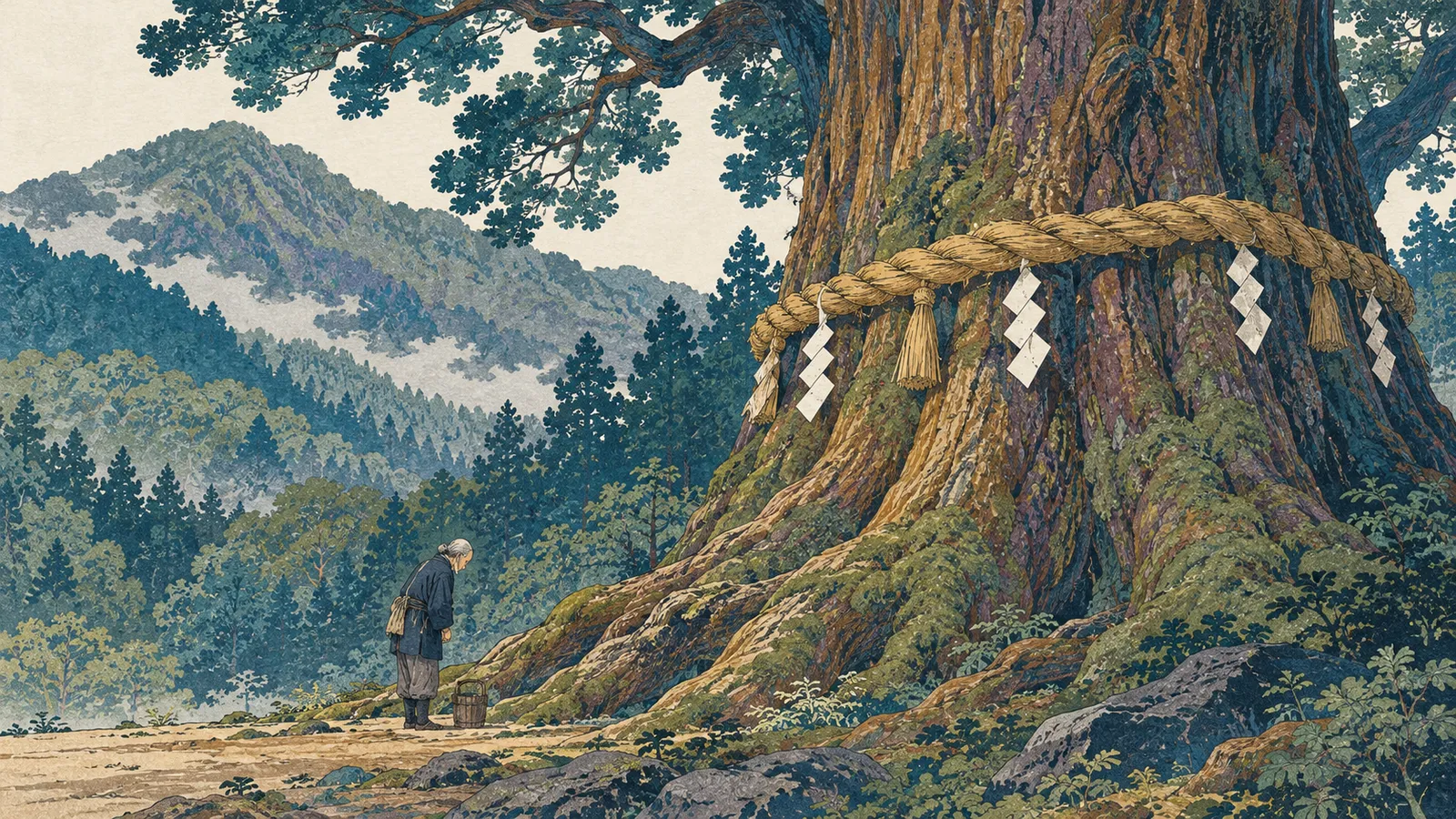
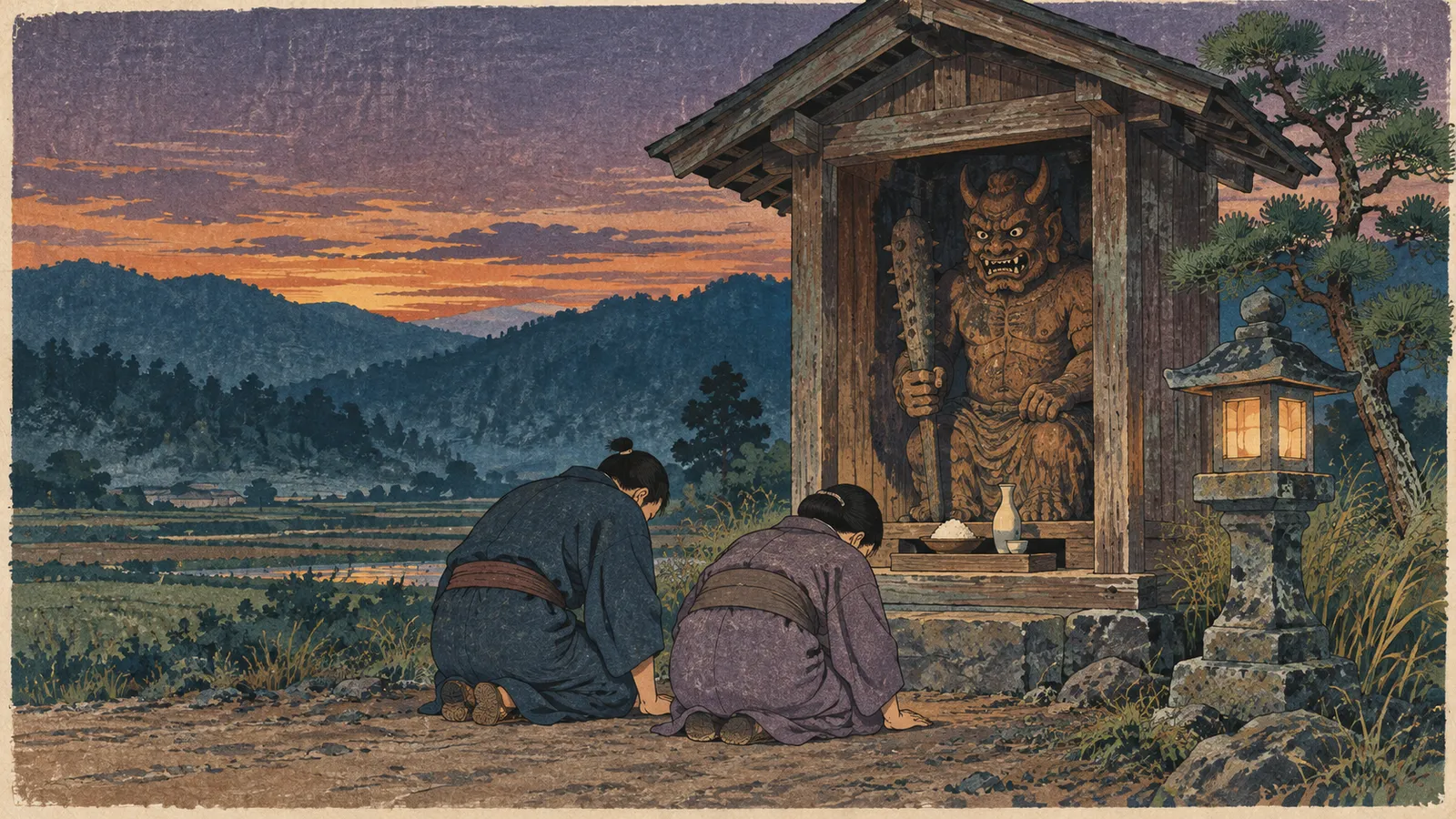
A Japanese scholar of religion, Ama Toshimaro, wrote a book about exactly this puzzle in 1996. He split religion into two kinds. One is the founded kind described above. The other he called “natural religion”: honouring the gods of the land and of the household, handed down from one generation to the next, with no founder and hardly any doctrine. A family bowing at the local shrine on New Year’s morning would seem to belong here. When people in Japan say they have no religion, he argued, they mean the founded kind. The other kind they simply do not count.
Not everyone agrees with where he draws the line, and many people in Japan do belong to a temple, a church or a newer religious group. But for many who grow up there, the year begins at a shrine without anyone asking them to believe anything first. The bow, the coin, the little paper fortune: children learn them from their families long before anyone mentions the word shūkyō.
So the friend who says “no religion” and then queues at midnight is not being inconsistent. They are answering the question the word asks: do you belong to a faith? The New Year visit was never what they were being asked about.