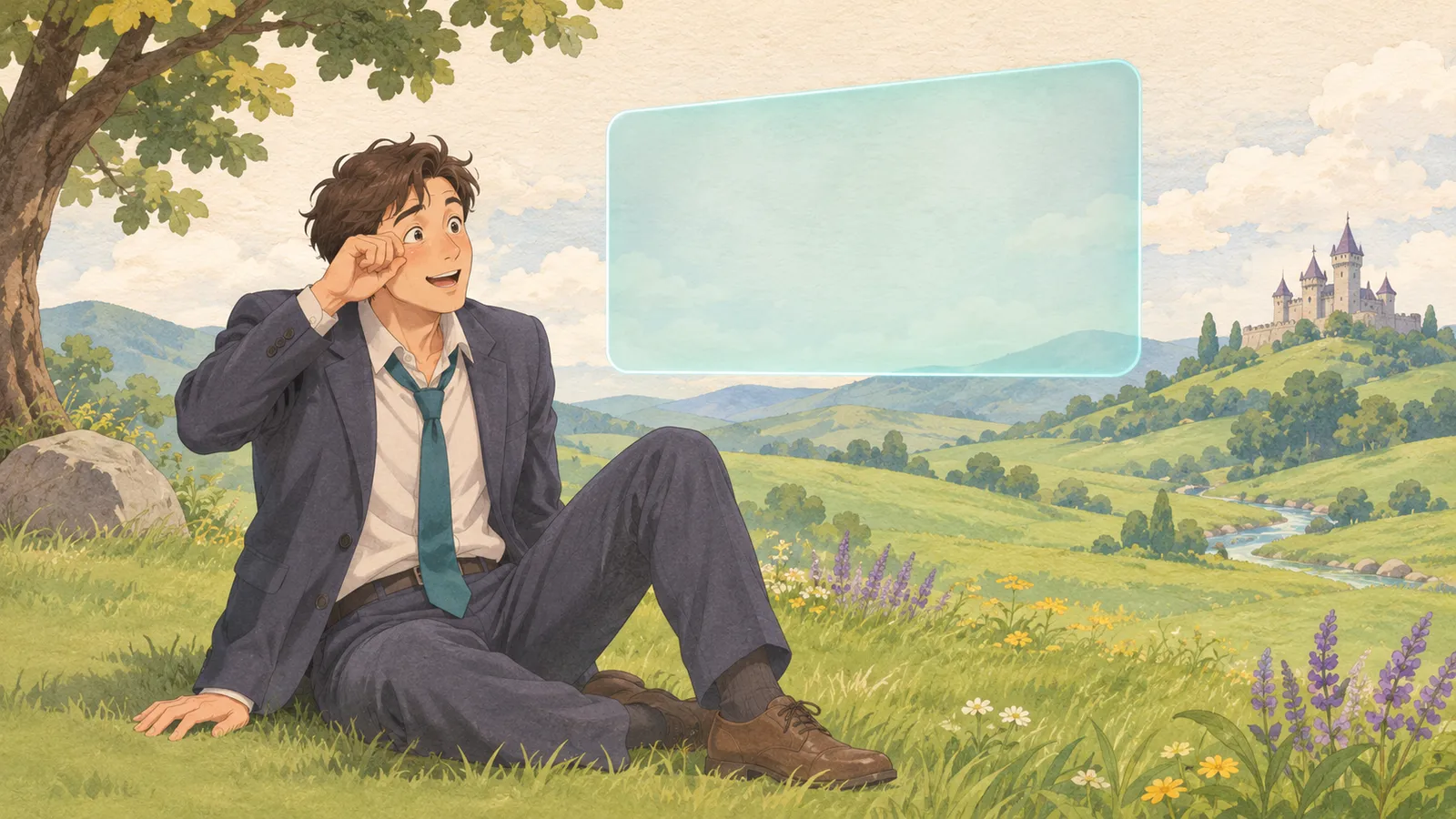
Scroll through the anime on almost any streaming service and the titles start to stand out. Some of them are whole sentences, and they mean exactly what they say: That Time I Got Reincarnated as a Slime. Re:Zero − Starting Life in Another World. And many of the stories begin in much the same way. An ordinary man whose life is going nowhere is hit by a truck. He opens his eyes in a world of swords, magic and monsters, sometimes with a floating menu that shows his level and skills, as if he were inside a video game.
This kind of story has a name: isekai, Japanese for “another world”. Why are there so many of them? The short answer is a website where anyone could post a novel for free, and millions of readers who kept choosing the same kind of story. Here is how that happened.
A website where readers chose
In 2004, a man in Japan started a website on his own, as a personal project. He called it “Let’s Become a Novelist”. Anyone could post a novel there, chapter by chapter, and anyone could read it, all for free. Readers could give stories points, and the site ranked the ones with the most.
In November 2012, one of its writers began a story about a 34-year-old man with no job who had shut himself away at home for years. Early on he is killed in a road accident while trying to save some high school students. He is born again as a baby in a world of magic, still carrying all his old memories, and this time he means to live properly. The story was Mushoku Tensei, “Jobless Reincarnation”, and readers loved it.
He was not alone. Re:Zero started on the same site that year. That Time I Got Reincarnated as a Slime, in which a 37-year-old office worker is stabbed in the street and wakes up as a slime, started in 2013. Dying under a truck became such a familiar way in that Japanese fans have a name for it: “truck reincarnation”.
On a site like this, nobody decides from above what gets read. Readers do. A story that looks like the ones people already love gets clicked, given points and pushed up the rankings, where even more people see it. Writers watch what rises, and write more of it. By 2016 the other-world stories were so popular that the site split its rankings in two: one for stories about being reborn or carried off to another world, and one for everything else.
Then the publishers came. A story that was already a hit online came with readers waiting for it, so publishers started turning the most popular ones into books. Mushoku Tensei, Re:Zero and the slime story all came out in print in 2014. Manga versions followed, and then anime: Re:Zero in 2016, the slime story in 2018, Mushoku Tensei in 2021. According to one tally of new releases in Japan, books with “another world” or “reincarnation” in the title went from 128 in 2014 to 490 in 2017.
Why readers wanted these stories
What about the long titles? A common explanation is that on a site with hundreds of thousands of stories, a new one has only a few words to catch a reader’s eye in a list, so writers put the whole idea into the title. That Time I Got Reincarnated as a Slime tells you the setup before you click. When the stories became books and anime, the titles came along.
But why this kind of story and not another? There is no single agreed answer, though Japanese writers on the boom keep coming back to two things.
One is games. Many readers grew up on role-playing video games, the kind where your character has levels and hit points and learns new skills by fighting. An isekai world often runs on those same rules. The reader already knows how it works, and the writer does not need to explain it.
The other is the wish to start over. The hero is often someone whose life did not go well, and the new world gives him a second chance, usually with a head start: a special power, or an adult’s memories in a child’s body. A publishing insider quoted by the Japanese news site Bunshun Online guessed that many buyers of the manga versions are in their 30s and 40s, often reading to forget an unpleasant reality for a while. Seen that way, it makes sense that the hero is so often not a young chosen one but a grown-up who got tired, and is handed another go.
An old idea, turned around
Going to another world is not new in Japanese stories. In the old folk tale of Urashima Tarō, a fisherman saves a turtle and is carried to a palace beneath the sea. He stays for what feels like a few days, then goes home to find that hundreds of years have passed. Old Japanese tales also tell of people who vanish into a world of gods and spirits for a while and come back changed.
What is new is the direction of travel. Urashima goes away and longs to come home. The isekai hero usually dies, cannot go back, and does not want to. The old world is the one he is leaving behind, and the new one is where his real life begins.
Back to the list
So the next time you scroll past a row of long titles about trucks, slimes and second chances, remember where many of them began: on one free website, where readers picked the story they wanted to read again and again, one click at a time, long before any studio saw it. That is a big part of why they look so alike.