Picture the kind of ghost-story ending most of us know. Someone works out what the ghost wants, a priest or a psychic arrives, the cursed object goes into the fire, and the house is quiet again. The ending is a fight, and the living win it.
Japan’s Ring (1998), the film Hollywood later remade as The Ring, refuses that ending. A videotape kills anyone who watches it seven days later, and nobody ever destroys the ghost behind it. The only way to survive is to make a copy and get someone else to watch it. One way to understand why is through a very old Japanese idea about the angry dead: they are not monsters to beat, but people who were wronged, and a wrong is not something you can win a fight against. It has to be made right. If nobody makes it right, the anger keeps going.
A curse you can only pass on
The ghost in Ring is a girl who was murdered and thrown down a well. Her curse travels on the tape.
The heroes do what the usual ghost story says to do: they find her body at the bottom of the well and bring it up, the way you might give a restless spirit a proper burial, and it does not help. The only thing that saves a person is still the copy. You live, and the stranger you showed it to is now the one with seven days. The curse is never broken. It just moves on, to someone who did nothing wrong.
To see why a story would work like that, look at who the ghost is.
The ghost who has a reason
In these stories the ghost is not a demon. She is a person who was wronged, usually murdered or betrayed, and who came back angry. Japanese has a word for this kind of spirit, onryō, roughly “grudge ghost”: the spirit of someone who holds a grudge for how they were treated and brings harm to the living. Her anger has a cause, and the cause is real.
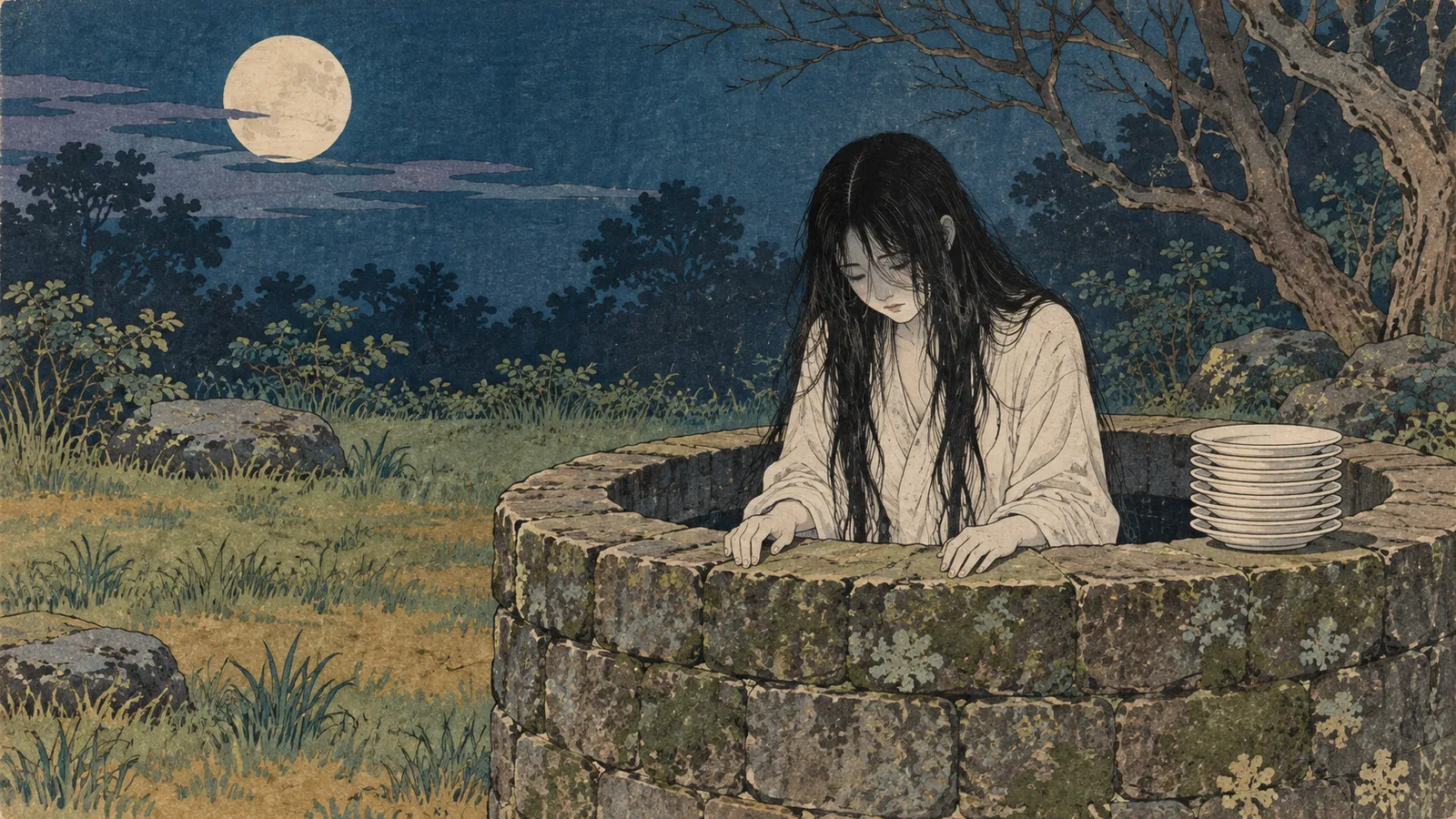
Ghosts like her are old in Japan. In a well-known old tale, often called “the plate mansion,” a young servant named Okiku is blamed for losing one of ten precious plates. She is killed and thrown into a well. Every night after that, her ghost rises out of the well and counts the plates, one, two, three, all the way to nine, and then cries out in grief at the missing tenth.
She was killed for something she did not do, and that is the whole point of her.
The angry ghost who became a god
The most famous case of what you do with a ghost like that involves a real man. Sugawara no Michizane was a respected scholar and one of the top officials at the emperor’s court, more than a thousand years ago. Rivals pushed him out, and he was sent far from the capital to the south of Japan, where he died in exile.
Then things started going wrong in the capital. The rival who had pushed him out died young. Later, the crown prince died too. People at court came to fear this was Michizane, angry at how he had been treated, striking back from beyond the grave.
So the court did what you do with a wronged person. In 923 it gave Michizane back his old office and raised his rank after his death. It was not enough to quiet the fear. In 930 lightning struck a hall of the imperial palace and killed officials inside, and many took it as his anger again. In time a shrine was built in Kyoto to honor him, and he was given the highest rank of all. He came to be worshipped as a god of learning, under the name Tenjin. Today, before big entrance exams, students across Japan visit his shrines to pray they will pass. The ghost once blamed for lightning on the palace now hears teenagers’ wishes for good exam results.
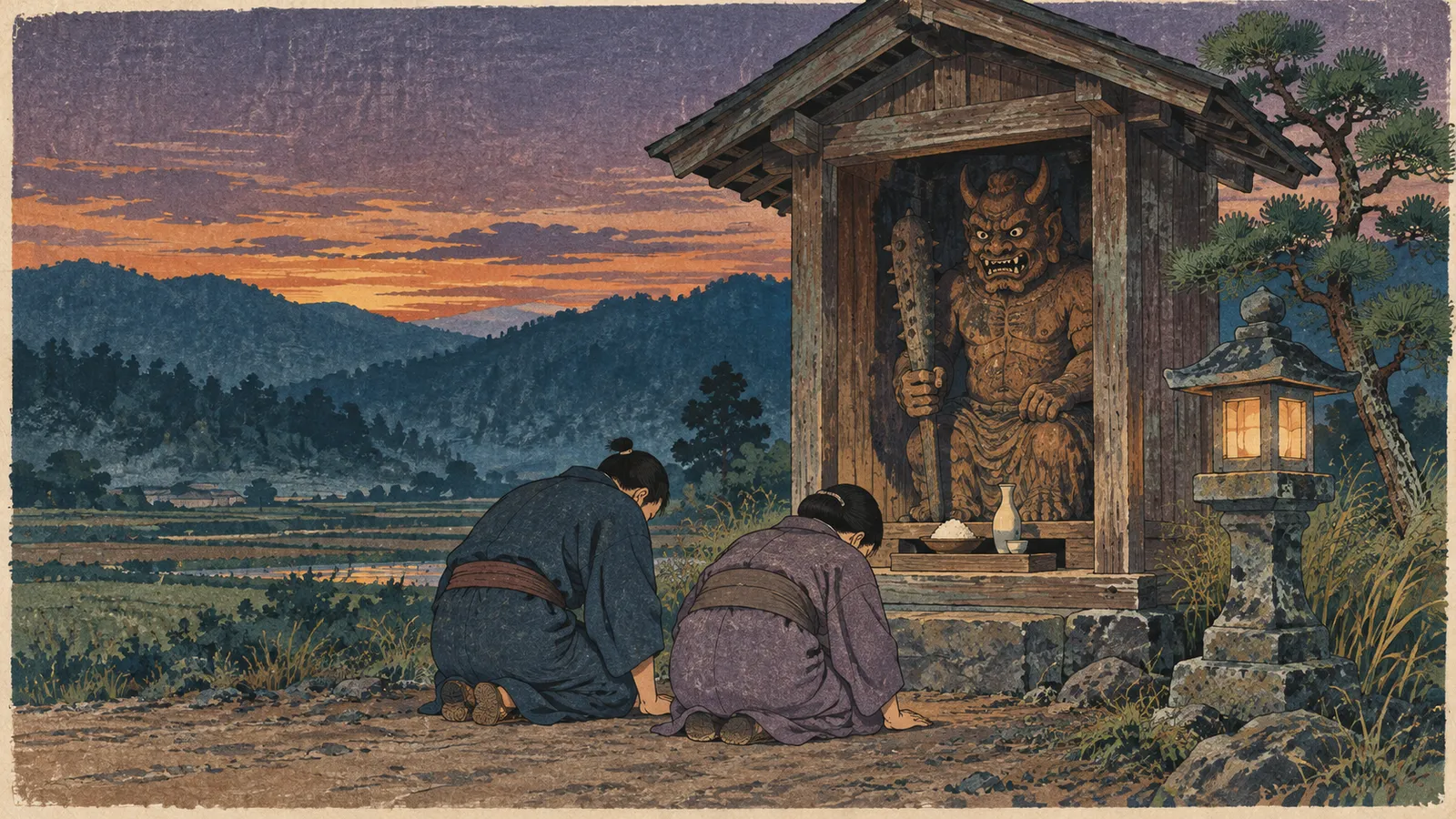
He is the best-known case, not the only one. In 863, decades before Michizane, the court held a public ceremony in Kyoto to calm the spirits of several nobles who had died after falling from power. For centuries in Japan, the spirits of people who died wronged or unhappy were often soothed by being honored as gods, instead of being driven away.
The ghost nobody calmed
Now go back to the videotape. Nobody apologizes to the girl in the well. Nobody gives her back what was taken, or builds her a shrine. Read with the old logic, her anger has nowhere to go but onward, from one viewer to the next, landing on people who never did anything to her.
Seen that way, there can be no last scene where the hero wins. The film is not about defeating a ghost. It is about a wrong nobody has made right. When a Japanese horror film leaves the ghost still out there at the end, it is often because, in the story, nobody ever said sorry.