Most stories have a few strange characters. Japanese stories seem to have whole crowds of them, and they are often not dragons or aliens. They are things you could meet on a walk or find in a kitchen: a river, a stone, a candle, a cup of tea, each with a mind of its own.
Here is the short answer to why. Two old habits meet. One is Shinto, the old religion of Japan’s local shrines, which finds gods living in mountains, rivers and trees. The other is a long tradition of giving strange things a name and a face, and then drawing them for fun. Two of Japan’s best-known exports show both at work: Spirited Away, an animated film about a girl lost in a world of spirits, and Pokémon, a game series about collecting pocket-sized creatures. You do not need to have seen either one to follow along.
Gods who come in for a bath
Spirited Away is an animated film by Hayao Miyazaki. A ten-year-old girl named Chihiro wanders into a world of spirits, and to survive she takes a job at a huge bathhouse. The customers who come to soak away their tiredness are gods.
One of them arrives as a dripping mountain of sludge. It stinks, and the other workers want nothing to do with it, so the girl is sent to scrub it. She finds something stuck in its side and pulls. Out comes a bicycle, then a flood of rubbish. What rises from the water at the end is the god of a polluted river, clean at last, who leaves well pleased.
A god who needs a bath sounds odd. But in Japanese stories, it is not only gods who turn up in unexpected places. Even the things on your shelf can come alive.
A ghost in a cup of tea
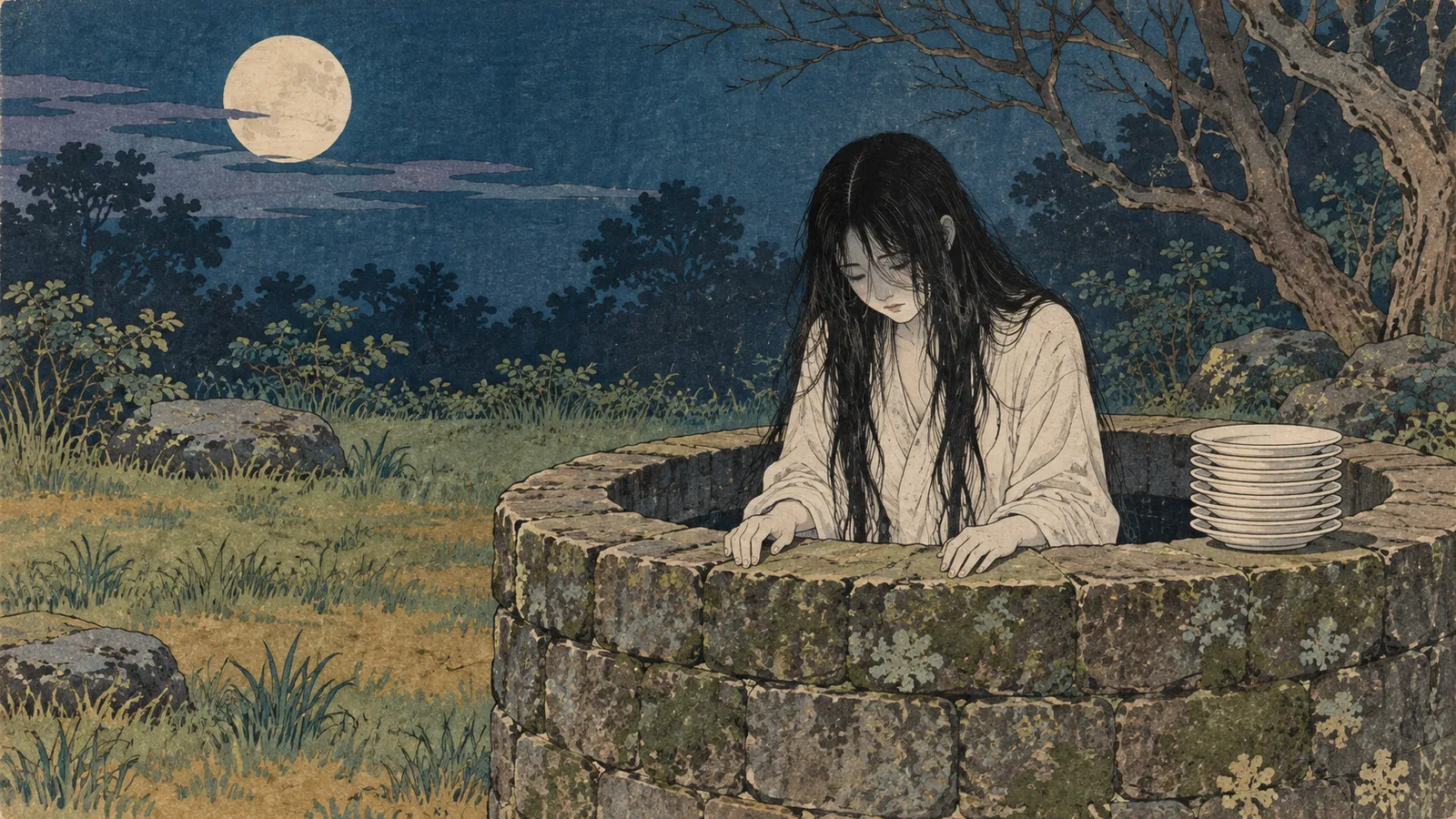
That is where Pokémon comes in. Its more than a thousand creatures each come with a short description in the official Pokémon encyclopedia. Some are animals, but plenty are not. Geodude is a rock: the encyclopedia says that when it keeps still, it looks just like a stone, and if you tread on it by mistake, it gets angry and swings its fists. Litwick is a little living candle. And the one called Sinistea is the soul of someone who died lonely, which has settled into a leftover cup of tea.
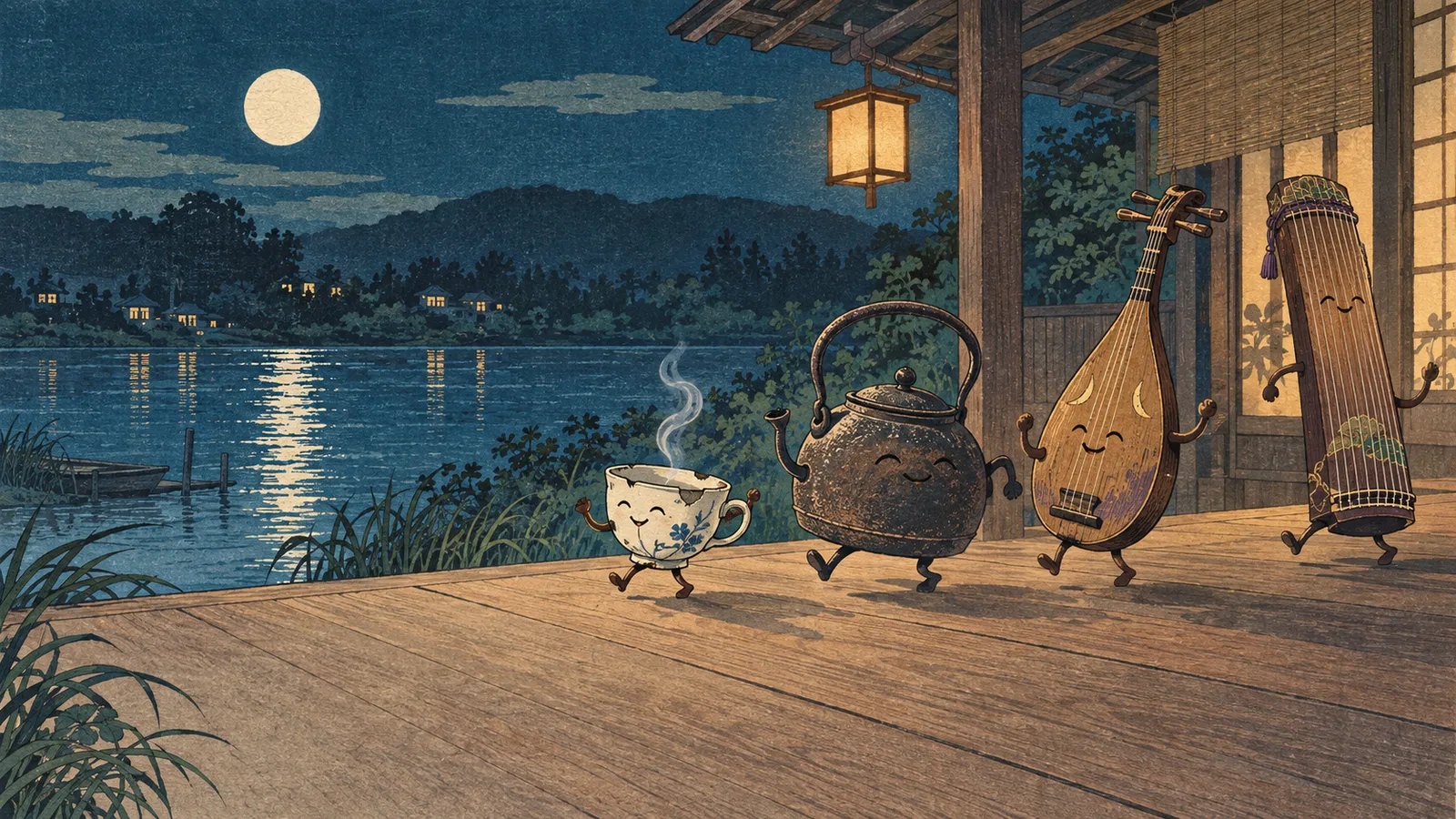
The game never says where that idea came from. But the idea that an ordinary object might have someone inside it was in Japan long before video games. There is a name for such things: tsukumogami, tools that have come alive. An old belief held that once a tool had been in use for a hundred years, a spirit would come to live in it.
An old illustrated tale, the Tsukumogami-ki, goes further. At the end of every year, households held a big clean called susuharai, “sweeping the soot,” and threw out their old things. In the story, the tools that get thrown away are furious at being dumped after years of service. They turn themselves into monsters to get their revenge.
A god in the mountain, a god in the tree
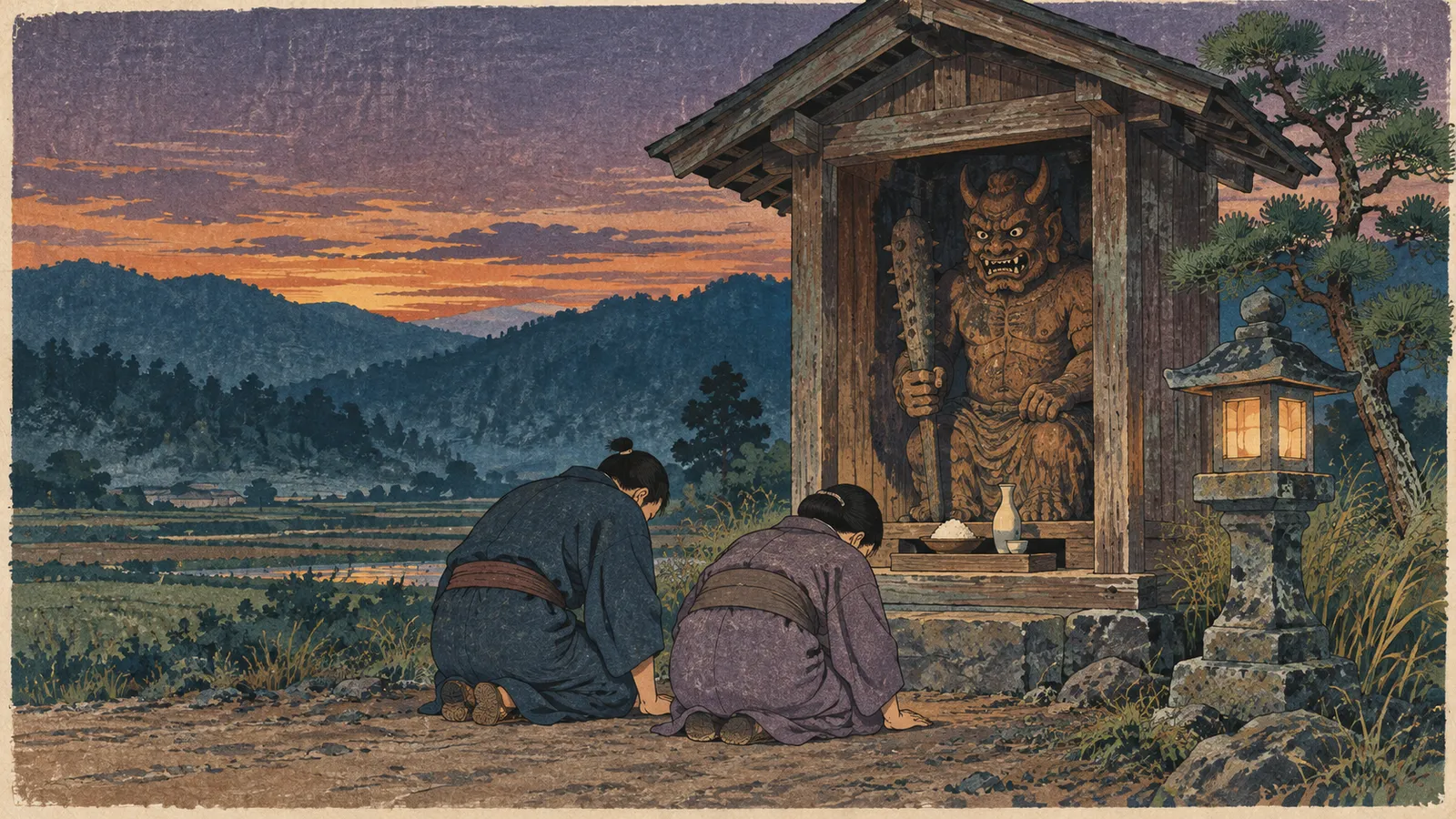
To see where all this comes from, start with Shinto. Its gods, called kami, are not mainly up in heaven. Many of them live in a particular place or thing. At Ōmiwa Shrine near Nara, there is no main building for the god at all. People pray toward Mount Miwa, the mountain itself, which has been treated as a home of the gods since ancient times. Old trees can be sacred in the same way, believed to have a god living in them.
There is a well-known phrase for how many gods there are: yaoyorozu no kami (yah-oh-yoh-roh-zoo no kah-mee), literally “eight million gods.” It is not a count. It just means more gods than anyone could count.
So a god from a local river is not a grand ruler of the universe. It is closer to a neighbour, exactly the kind of god who might drop in for a bath.
Not every spirit is a friendly neighbour, though. Japanese has a word for the creepy ones, which you may have seen in anime or games: yokai, which covers monsters, ghosts and other eerie beings. The line between a god and a yokai is blurrier than it sounds. The folklorist Komatsu Kazuhiko describes these beings as spirits with feelings. Treat one with care and worship it, and it becomes a god that brings good luck. Neglect it, and it becomes a yokai that brings trouble.
Giving the strange a face
In Japanese dictionaries, yokai means not only creatures but also strange happenings: anything that is hard to explain and a little unsettling.
One way to read the tradition is this. A nameless fear is hard to talk about. A creature with a name and a face can be described, joked about and told to children.
In the 1700s, an artist named Toriyama Sekien turned yokai into a kind of picture encyclopedia. His first book came out in 1776, and three more followed. Inside are creatures many Japanese people still know today: the kappa, a water creature said to drag children into rivers; the tengu of the mountains; a woman whose neck stretches impossibly long. His fourth book, from 1784, turns the household into a monster parade: a lute, a harp, a cooking pot, each one a tool come alive, the same tsukumogami as in the old tale.
So Japan’s crowd of spirits did not only grow out of village belief. Some of it was drawn, collected and added to by artists, for readers who enjoyed being a little spooked.
Still being drawn
That habit never stopped. In the 20th century, Mizuki Shigeru, one of Japan’s best-loved comic artists, made a whole career of drawing yokai, and Sekien’s old picture books were among the ones he kept and worked from. Miyazaki put a river god in a bathhouse. Pokémon put a lonely ghost in a cup of tea.
So why are Japanese stories so full of spirits? Shinto taught people to see gods in mountains, rivers and trees. The yokai tradition gave names and faces to whatever felt strange, and artists kept adding to the crowd. The bathhouse god and the ghost in the teacup are simply the newest members of a very old crowd.
None of this means everyone in Japan thinks their kettle has a soul. Plenty of yokai were simply entertainment. It means that in a Japanese story, a kettle with a soul is not a strange idea at all.