In March 2024, a Japanese monster movie won the Oscar for Best Visual Effects. Godzilla Minus One was the first Japanese film ever to win that award, and in North America it had already become the highest-earning live-action Japanese film on record. If you saw it, you may have come out a little surprised that a giant-lizard movie had made you care so much about the people running from it.
The surprise has a history. Godzilla is seventy years old, and the very first film was not made as a fun creature feature. It was made in a country that had been bombed flat less than a decade earlier, a few months after a new kind of bomb had reached a Japanese boat in the middle of the Pacific. To see what Godzilla meant to its first audience, you have to start with that boat.
A fishing boat in March 1954
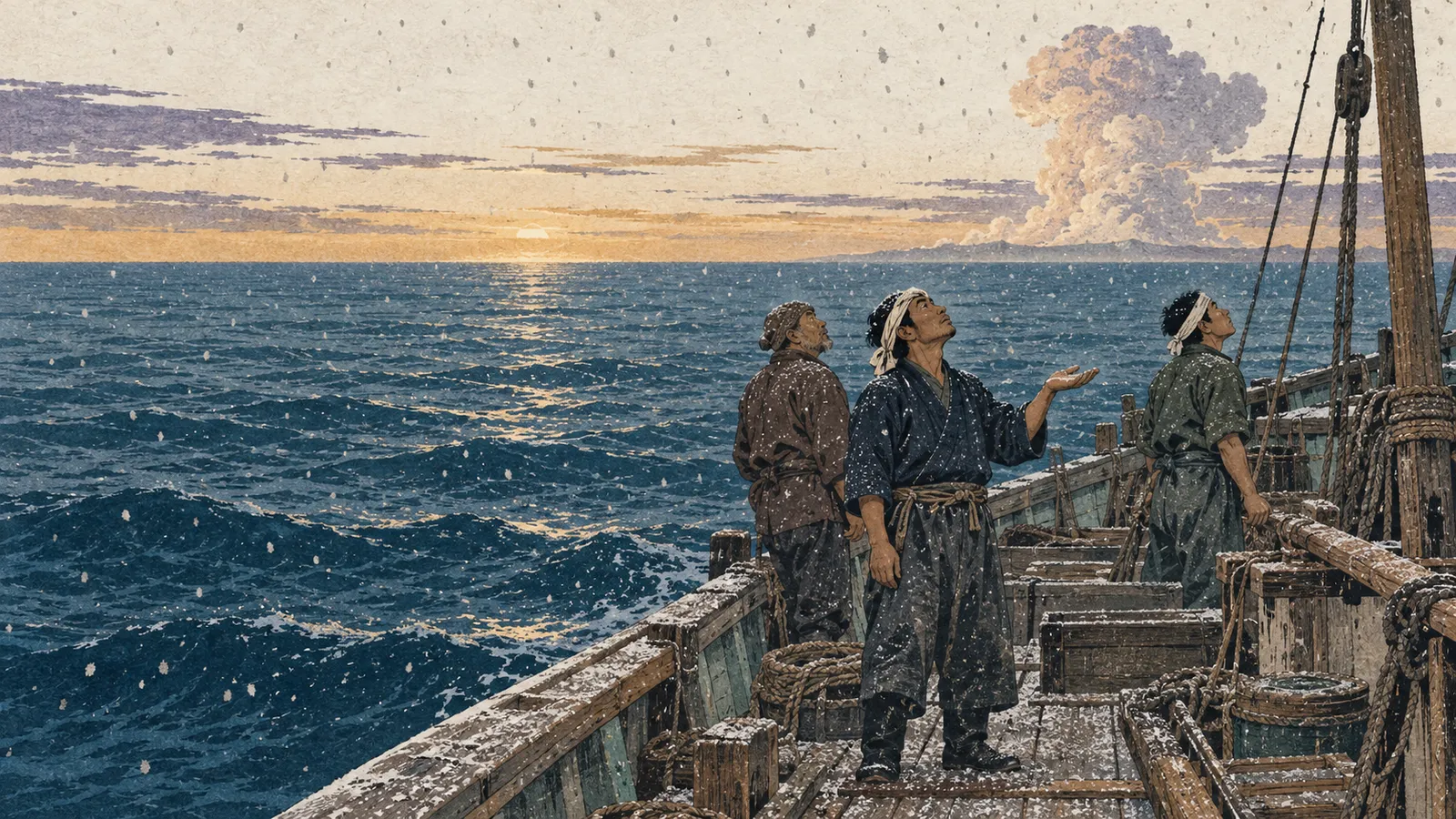
On 1 March 1954, the United States tested a hydrogen bomb at Bikini Atoll in the Marshall Islands. It was roughly a thousand times more powerful than the bomb dropped on Hiroshima. About 160 kilometres away, a tuna boat called the Daigo Fukuryū Maru (Lucky Dragon No. 5) was fishing with 23 men on board.
White ash fell on the deck for hours. The crew did not know what it was. By the time they got home to Japan, they were sick, and the newspapers had a name for the ash: shi no hai, “the ashes of death”. In September the boat’s radio operator, Kuboyama Aikichi, died. People across Japan were already afraid of eating fish that might have been caught in contaminated water.
At the film studio Toho, a producer named Tanaka Tomoyuki had just seen another project collapse. With the Lucky Dragon in every newspaper, he pitched a replacement: an ancient creature asleep under the sea near Bikini, woken by the H-bomb tests, comes ashore and attacks Japan. That film, Gojira, directed by Honda Ishirō with special effects by Tsuburaya Eiji, opened on 3 November 1954, eight months after the ash fell. Close to ten million tickets were sold, a huge hit for its day.
What the first audience saw
Inside the film, the explanation is said out loud. Godzilla is a prehistoric animal driven out of its home by repeated H-bomb tests. When it comes ashore it carries radiation with it, and its breath sets the city on fire.
For people in 1954, that burning city was not a special effect. Tokyo had been firebombed in 1945, and most adults in the audience had lived through air raids or lost someone to the war. Hiroshima and Nagasaki were nine years in the past. The film lingers on what comes after the monster: aid stations crowded with the wounded, radiation reaching even small children, and a mother who has given up hope, holding her children as the city burns and telling them they are going to be with their father. The Japanese film critic Watari Machiko reads that line as a sign of how fresh the memory of the war dead still was. The audience in 1954 would not have needed it explained.
The scientist who could kill Godzilla, Dr Serizawa, has invented a device that strips the oxygen out of water and kills everything in it. He is terrified that the world will turn it into another weapon, one even worse than the monster. He agrees to use it once, on Godzilla, and he dies with the monster so that the secret dies too. In the last scene, the old paleontologist Yamane says he cannot believe this Godzilla was the last of its kind: if the H-bomb tests go on, another one may appear somewhere in the world.
So the most common way to read the first Godzilla is as the bomb itself, given a body: something people made, which they cannot control, walking through a city they have only just rebuilt.
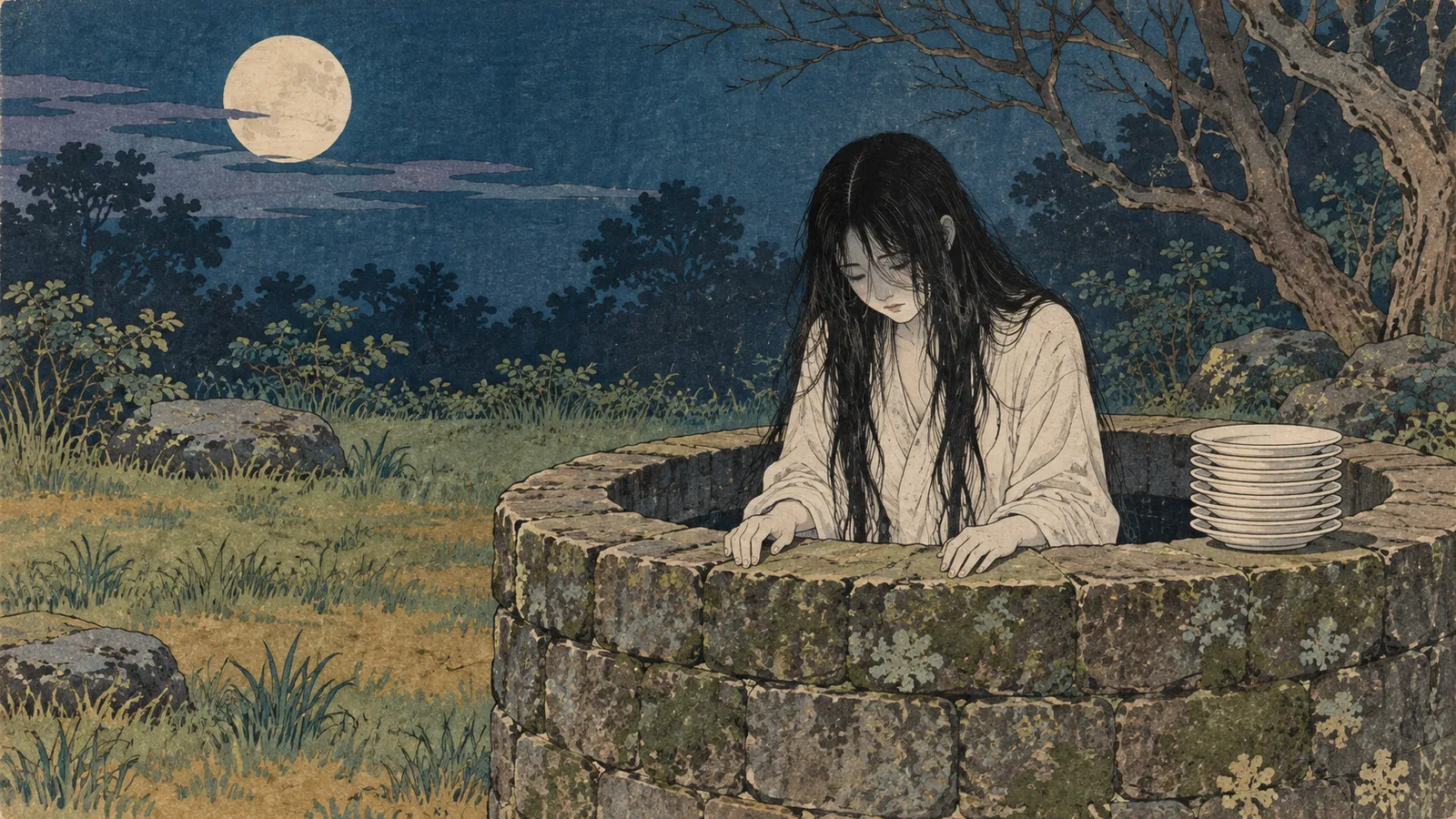
There is a second reading, quieter and more haunting. Huge numbers of Japanese soldiers and sailors died in the war across the Pacific, many of them at sea and never brought home. Godzilla also comes out of the Pacific and walks into the capital. The Japanese critic Kawamoto Saburō read the monster as a figure for those soldiers lying at the bottom of the sea, and others have followed him in seeing Godzilla as the war dead coming back. It is a reading, not a fact, but it explains why the monster feels less like a villain than like something the country owed a reckoning to. Many Japanese ghost stories are about the dead who were never properly mourned and so come back, and seen this way, Godzilla is one of them.
From nightmare to friend
The monster did not stay frightening for long. In 1964, in the fifth film, Ghidorah, the Three-Headed Monster, Godzilla teams up with other monsters to fight off a creature from space. From there the series leaned towards wrestling matches between giants, and for many children in the 1960s and 70s Godzilla was a big, grumpy defender of Earth rather than a walking disaster.
Viewers outside Japan never saw the original version for decades. The American release in 1956, Godzilla, King of the Monsters!, added new scenes with Raymond Burr as an American reporter and cut much of the material about the bomb and the war. The same footage became a different story: a monster attack seen through foreign eyes, with far less of what had made Japanese audiences go quiet.
Back to 1945
This is what makes Minus One interesting. With seventy years of sequels to choose from, director Yamazaki Takashi set his film in 1945 to 1947, when Japan was a country of ruins and survivors. The title points the same way: the country is already at zero after the war, and then the monster takes it below zero.
The film’s hero, Shikishima, is a kamikaze pilot who faked an engine problem rather than die, and who comes home ashamed to be alive. Godzilla arrives in a Tokyo that is only just standing again. The story follows him as he tries to rebuild a life among the ruins while feeling he has no right to one. Perhaps that guilt, of having survived when so many did not, is the closest thing to what the first audience carried into the cinema in 1954.
So what was the original Godzilla about? It was about living in the nuclear age, made by people who had just watched it arrive twice: once over their cities, and again as ash on a fishing boat. Later films turned it into a hero, a mascot whose giant head now looks down from a cinema building in central Tokyo. Minus One took it back to where it began, and audiences who had never heard of the Lucky Dragon felt it anyway.