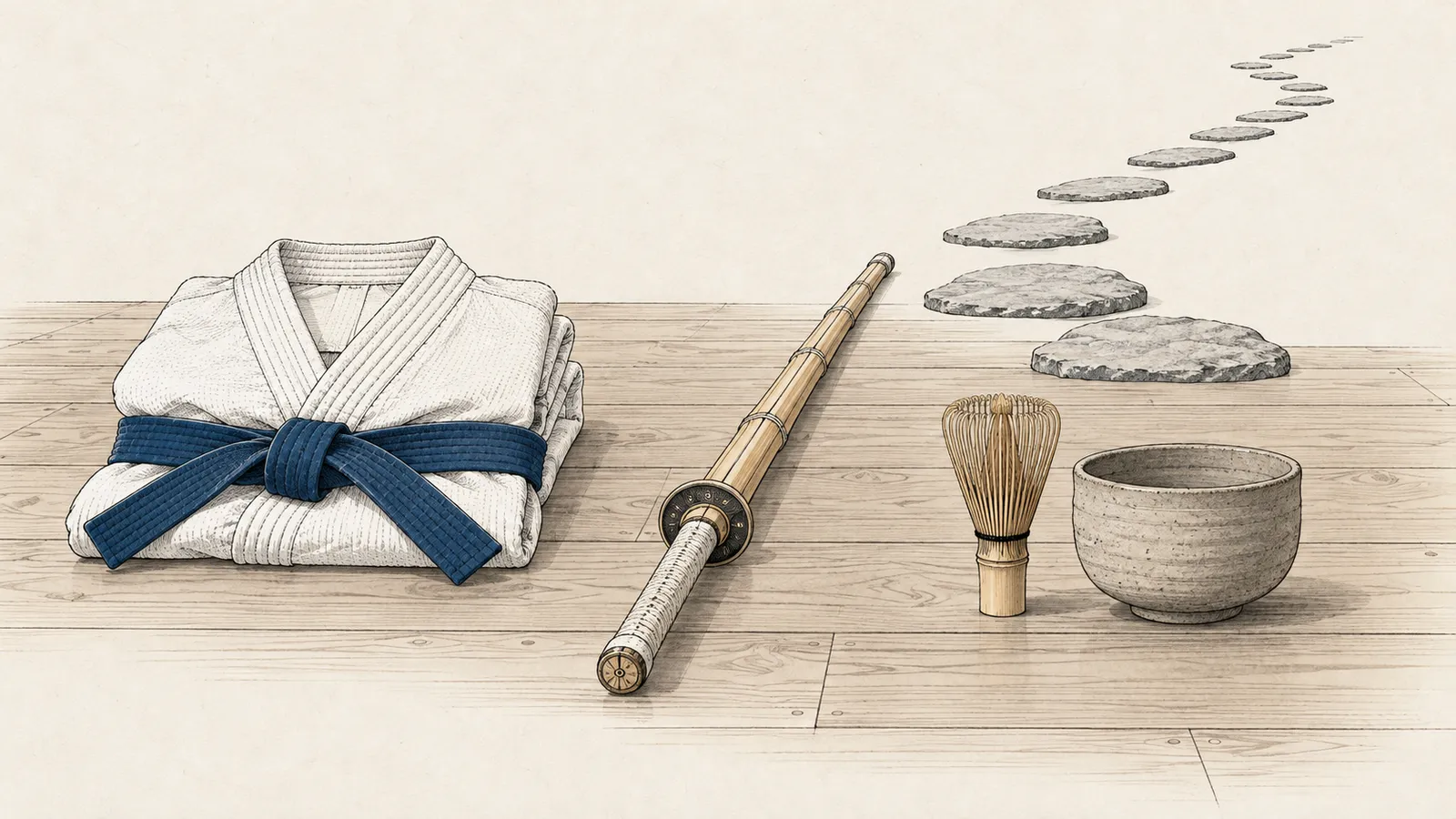
Plenty of people who have never been to Japan can say “judo” without a second thought. Add aikido, karate-do and kendo, and you have a small vocabulary that turns up in gyms and community centres all over the world. Then there is the tea ceremony, which in Japanese is often called sadō or chadō.
Say them slowly and the pattern jumps out. Ju-do. Ken-do. Aiki-do. Cha-do. If you have ever trained in one of these, you have also bowed your way into a dōjō, the training hall. Same sound again.
It is the same word every time, and it is written with the same character: 道.
A road, and a lot more than a road
At its plainest, 道 means a road or a path. Someone in Japan giving directions might use it for the street outside the station. Read in Chinese, the same character is dao, the “Tao” of Taoism, the way the world moves and the way a life might follow it.
In Japan the word stretched in its own direction. The word geidō, “the way of the arts”, is found as early as the Muromachi period, in the writing of the playwright Zeami. It was used for the arts where the spirit mattered most, and it carried a note of high standing. A performance needs an audience, but a geidō does not: it is something you pursue to train yourself. In the Edo period the habit spread, and more and more martial and performing arts gained a “way” in their names. You didn’t simply learn such an art. You followed it, possibly for life.
That is also why the training hall is a dōjō: literally “the place of the way”. The word comes from Buddhism. It translates the Sanskrit bodhimaṇḍa, originally the spot under the bodhi tree where the Buddha reached enlightenment, and it came to mean a place for Buddhist practice, and then a temple.
When the fighting arts changed their names
Here is the part most people don’t expect. For most of their history, Japan’s martial arts were not “ways” at all. They were jutsu: techniques, skills. Swordsmanship was kenjutsu. Unarmed grappling was jūjutsu, which is where the English “jiu-jitsu” comes from. Archery was kyūjutsu.
The first well-known change came from a young teacher named Kanō Jigorō. In 1882 he opened his own school in Tokyo and called it the Kōdōkan, a hall for studying the way. He had trained in jūjutsu, but he came to see judo as more than technique: a “way” of using the strength of mind and body as effectively as possible. He kept the jū, “gentle” or “yielding”, and swapped “technique” for “way”. The name Kōdōkan says as much. It was given because judo is not only about learning technique but is a way, and the hall is where that way is taught.
The rest followed over the next few decades. In the Taishō era, Nishikubo Hiromichi, a senior figure in the Dai Nippon Butokukai, the national body for the martial arts at the time, pushed for the word budō, “martial way”, in place of bujutsu, “martial technique”, and the Butokukai renamed its martial arts college to match. Archery became kyūdō in 1919, when the national archery association became an incorporated foundation. Swordsmanship had long been called kenjutsu or gekken, and the name “kendo” was first used officially in 1926, in the school gymnastics guidelines. Other arts went through renamings of their own: karate, once written with the characters for “Chinese hand”, was fixed as “empty hand” at a gathering of karate masters in Okinawa in 1936, and in 1942 Ueshiba Morihei began calling his art aikido.
Does the change of name mean the arts themselves changed? Practitioners argue about that to this day, and martial arts forums are full of “jutsu versus do” threads. One way to see it: the techniques stayed much the same, but the story told about them shifted, from how to win a fight to what kind of person the training makes you.
Tea got there first
Tea took a completely different road, and a much older one.
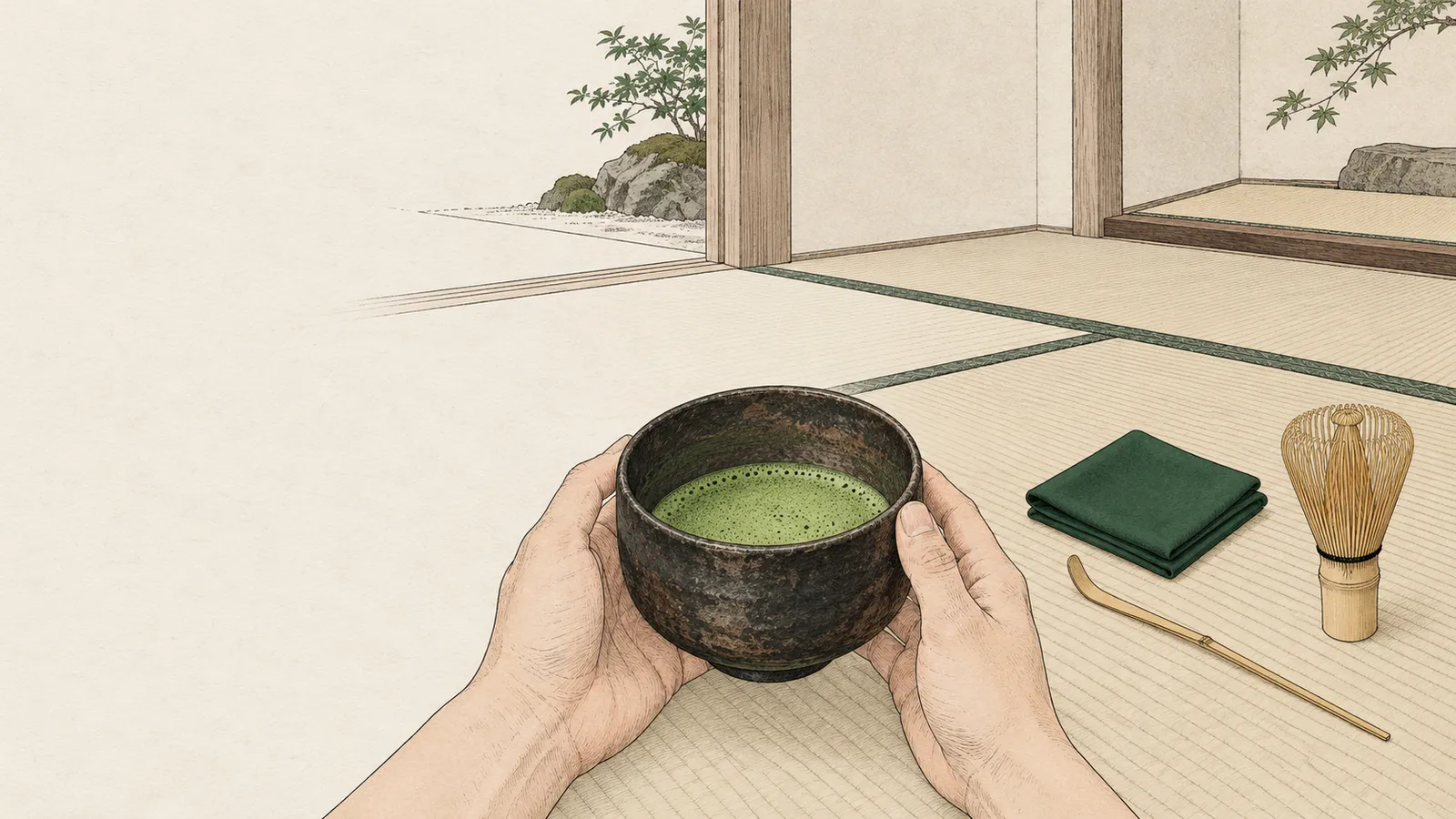
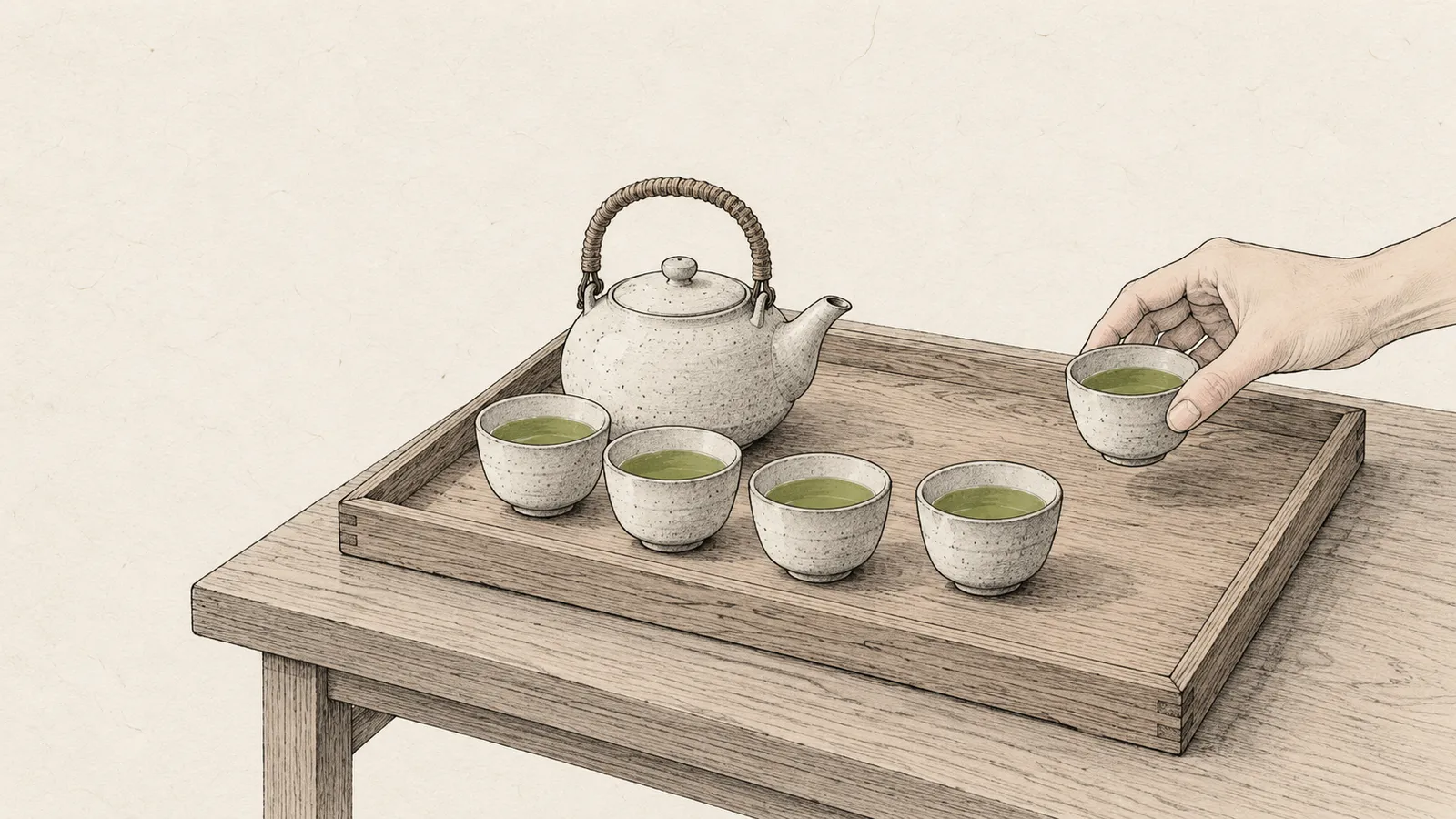
The everyday name for the tea ceremony is chanoyu, which simply means “hot water for tea”. In the 1500s, tea masters such as Sen no Rikyū shaped the quiet, carefully choreographed gathering people picture today. Then, in the early 1600s, people began to call it chadō, the way of tea, as the idea of an art as a lifelong discipline grew stronger.
So the way of tea was a “way” roughly three hundred years before kendo was. Flower arranging, often called kadō, “the way of flowers”, sits in the same family of arts.
Both names are still in use. Chadō is the younger one, and it appeared when people began to think of tea as a “way”, a standard to measure yourself against. Perhaps that is the best way into what “do” means in all these words. There is no winner at a tea gathering. You come back, and you keep at it.
Words that only look like relatives
Once you start spotting 道, you see it everywhere, and not every case belongs to this story.
Shinto, the name for Japan’s native religious tradition, contains the same character, and it is usually translated “the way of the kami”, the gods or spirits. But the word itself came from Chinese. It first appears in Japan in the Nihon Shoki, a chronicle finished in 720, and scholars still disagree about exactly what it meant there. It is a much older word with a separate history from the dōjō arts.
Bushido, “the way of the warrior”, sounds as if it should be the oldest of the lot. It first appears in writing in a military chronicle of the early 1600s, the Kōyō Gunkan, and it became famous around the world much later, after Nitobe Inazō published his English book Bushido: The Soul of Japan in 1899. Nobody signs up for bushido classes. It is a set of ideals people wrote about, rather than an art you practise in a hall.
So why do judo, kendo and the tea ceremony all end in “do”? Because each one, at some point, decided it was more than a skill. Tea made that move early, around the start of the 1600s. The fighting arts made it in modern times, beginning with Kanō’s judo in 1882 and gathering pace with a string of renamings in the early twentieth century. The same small word was asking the same question of all of them: not just how to do this, but how to keep walking it.
The next time you hear someone mention their judo class, listen for the last syllable. It is a road sign.