Order a matcha latte almost anywhere now and you get the same thing: a tall glass of bright green, milky and sweet. Next to it on the counter there is often a matcha cookie, a matcha muffin, and a little sign saying it is packed with antioxidants and gives you “calm energy”.
So what is that green powder? It is green tea, but it is not the same green tea as the bag in your cupboard. The difference starts long before the cup, in a tea field in Japan where the bushes are deliberately kept out of the sun.
A tea grown in the shade
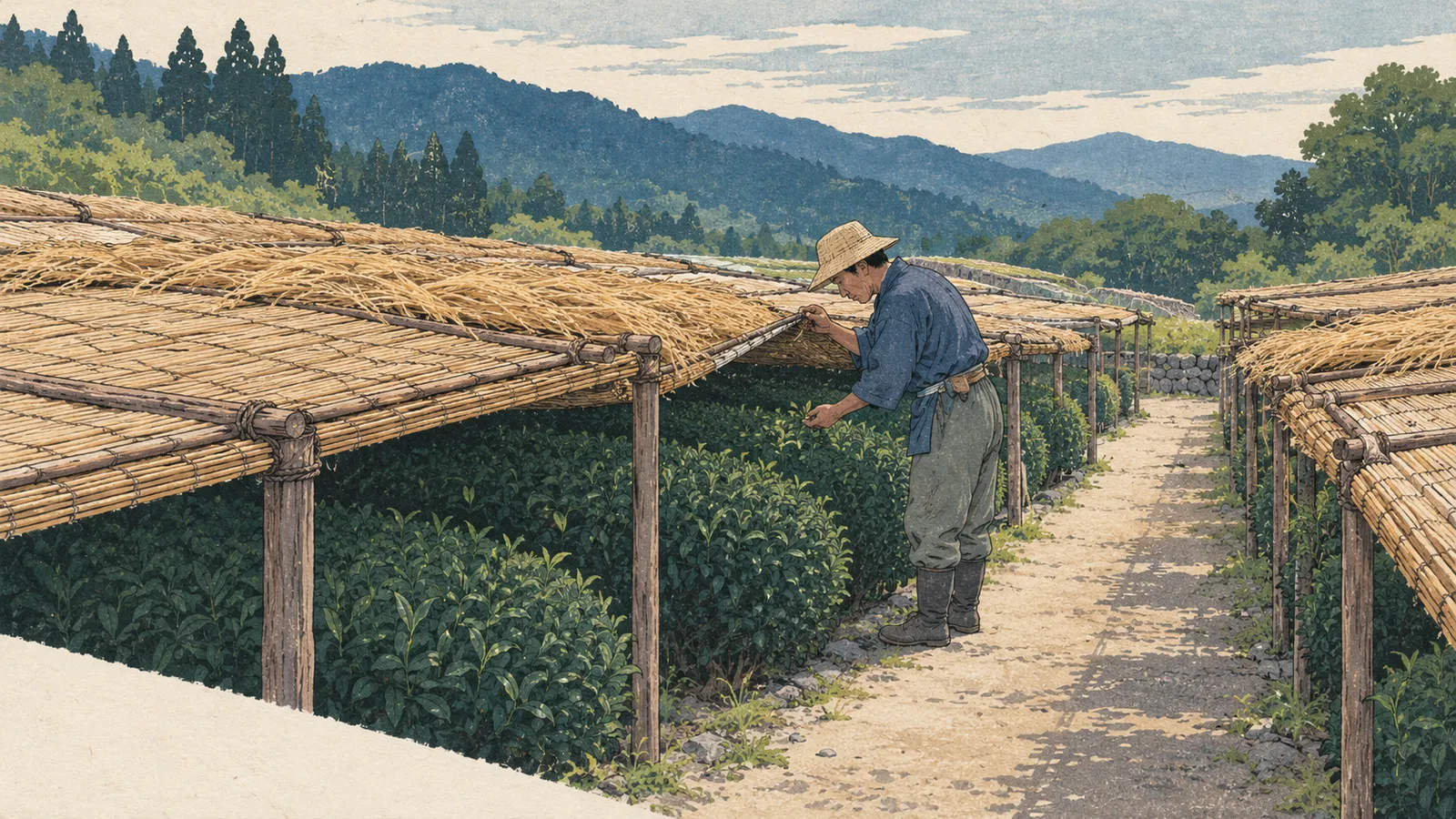
Matcha comes from tea bushes that are covered up before they are picked. For two to three weeks before harvest, farmers spread shades over the rows. Uji, a city just south of Kyoto, is one of the most famous names in Japanese tea. There, some farmers still use the old method: they build a frame over the field and lay reed screens and rice straw on top. Mesh cloth is also used today. Either way, the bushes sit in a dim green half-light.
The plant reacts to the shade. The leaves keep more of a compound called theanine, which gives tea a savoury, brothy taste, and make less of the bitter compounds called catechins. This is why good matcha tastes rich and a little sweet rather than sharp.
After picking, the leaves are steamed and dried flat, without being rolled. Then they are ground, traditionally in a stone mill, into a powder finer than flour. That powder is matcha. Only this shaded leaf gets the name: grind ordinary green tea and you get what Japan sells as plain “powdered tea”.
The everyday green tea in Japan, called sencha, is made the opposite way. It grows in full sun, and its leaves are rolled as they dry. You pour hot water over them, drink the water, and throw the leaves away.
The shade gives matcha its taste. But the bigger difference is what ends up in your cup. With sencha you drink what the leaf gives up to the water. With matcha you whisk the powdered leaf into the water and drink the whole leaf.
Is it actually good for you?
Drinking the whole leaf means you take in what is in the leaf itself, its theanine, catechins and caffeine, rather than only what dissolves into hot water. That part of the health story is true.
The bigger promises are another matter. Green tea has been studied a great deal, and a Japanese medical guide sums it up plainly: most of the claimed benefits, such as preventing cancer or heart disease, lack strong scientific evidence. Most of that research is about green tea in general or its compounds in isolation, not about matcha lattes. The same guide notes that green tea is generally safe, but the caffeine can cause sleeplessness or a racing heart in some people.
And a latte is a different drink from the tea. Once you add a large glass of milk and a few pumps of syrup, you are mostly drinking milk and sugar with a green tea flavour. That can be a lovely thing to drink. Being green does not make it a health drink.
So what can honestly be said? Matcha is a green tea that you drink leaf and all, caffeine included. Beyond that, nobody can promise that a cup will keep you well.
How do people in Japan drink it?
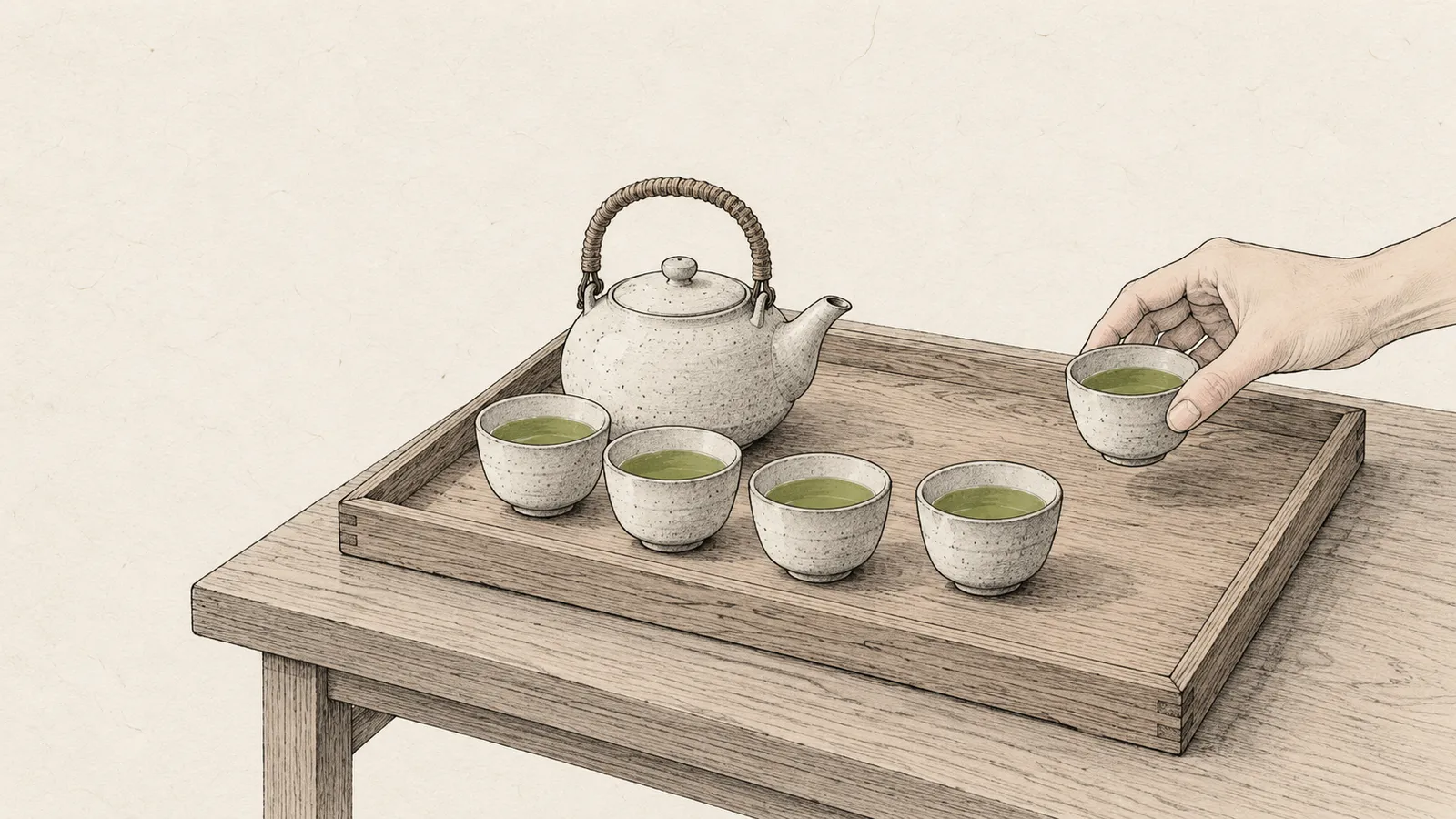
If you picture people in Japan sipping bowls of matcha every morning, you would be surprised. For most people matcha is not an everyday drink. The everyday tea is sencha, made in a teapot at home, or green tea from a plastic bottle bought at a vending machine or convenience store.
Matcha has its own places. It is the tea of the tea ceremony, where it is whisked to a froth in a wide bowl and served with a small sweet. It is also a flavour that is everywhere: matcha ice cream, matcha chocolate, matcha cakes, and matcha lattes in Japanese cafés too.
The craze abroad has reached back into those fields. The value of Japan’s green tea exports rose by about a quarter in 2024, and more than half of that tea by weight was matcha. Shops in Uji have seen overseas visitors queuing before they open, and in 2025 the average price paid for Kyoto’s matcha leaf was 2.7 times what it had been a year earlier. About 70 percent of the tea grown in Kyoto Prefecture is this shaded leaf, meant for matcha.
The green in your glass
Back to that latte on the counter. The colour in it began in a field under straw and cloth, where tea bushes were kept from the sun so their leaves would taste sweeter and less bitter. Then the leaves were dried, milled, and sent all the way to your café.
That is what matcha is: green tea that you drink whole. It gives you more of the leaf than any teabag can. Whether your latte is good for you depends much less on the tea than on the milk and sugar that go in with it.