Picture the Japan most people carry around in their heads. Bullet trains that leave on the second and arrive on the second. Train gates you pass by tapping a phone. Vending machines on quiet corners that sell hot coffee in a can.
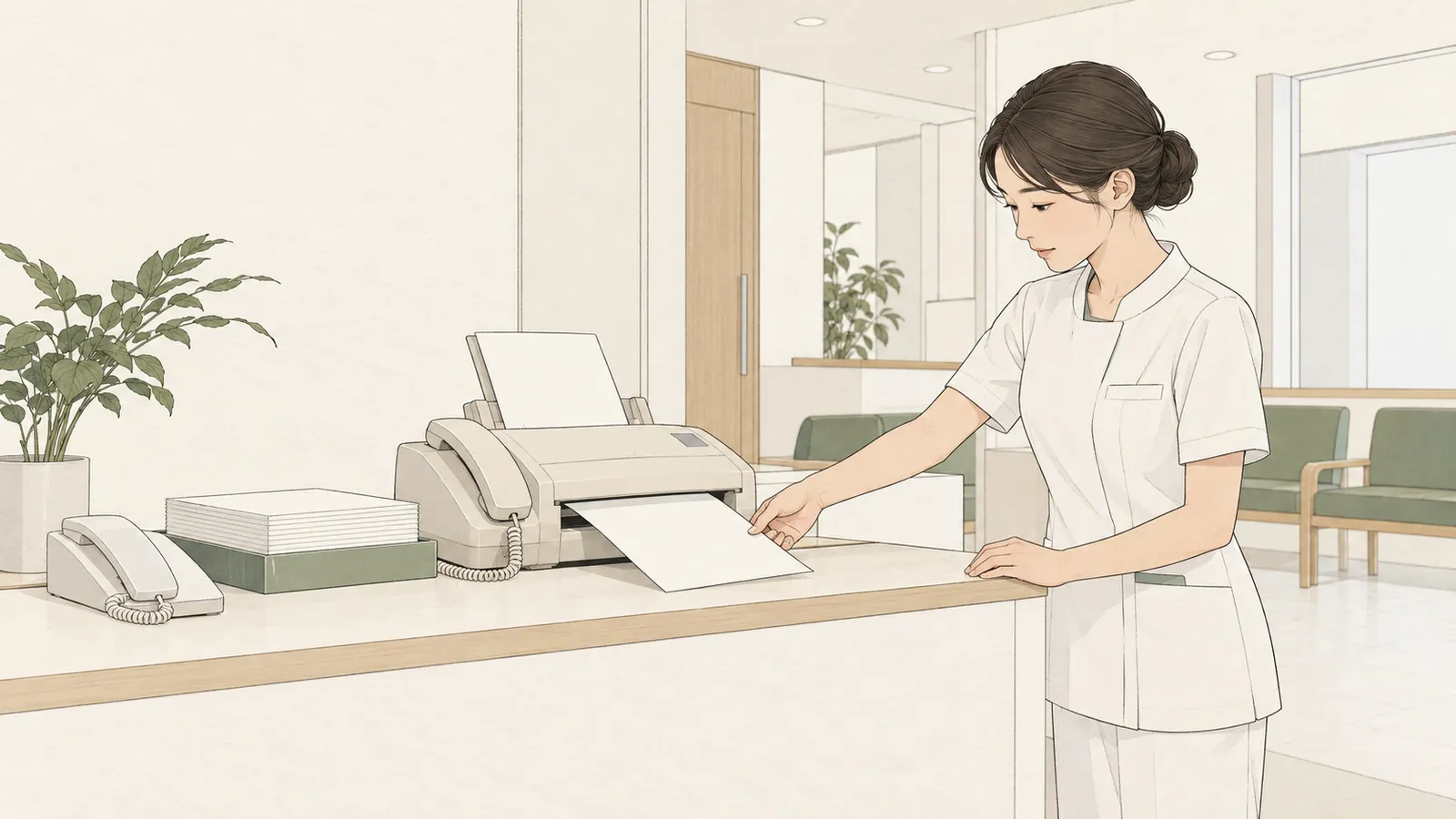
Now picture a scene that plays out every day somewhere in Japan. At a small clinic, a referral letter goes into a beige machine that whirs and squeals and pushes the page down a phone line, one slow line at a time. In a factory office down the road, a clerk pulls an order off another machine and types it into a computer by hand.
Both pictures are true. The fax machine is still at work in Japan, and people outside the country often find that hard to square with the bullet train. The short answer is not that Japanese offices have never heard of email. It is that the fax sits on top of a few habits that hold each other up, and pulling it out turns out to be much harder than it looks.
Is Japan really “still on fax”?
Partly, and less than the jokes suggest.
In early 2024, a Japanese telecom industry group (CIAJ) asked about 4,000 working people in Japan whether they used fax for work. About 40% said yes. The number of people who had never used one at all had grown, from about 33% in 2021 to about 41%. Household fax machines are fading too: by 2018, government figures put them in roughly a third of homes.
Here is the part most people do not expect. The same group asked the same question of working people abroad. In Germany, about half said they used fax for work. In the United States, in a 2023 survey, it was more than two in three. By that measure, Japan faxes less than either. So the fax is not uniquely Japanese. What stands out in Japan is where it lingers: in clinics and pharmacies, in small firms that take orders, and inside government itself.
In 2020, when COVID arrived, reports of new cases in Tokyo reached officials as paper forms, one A4 sheet per patient. A national online system for those reports had just been launched, but in July that year many local health offices, including nearly all of Tokyo’s 23 wards, were not yet using it.
Paper that already has a stamp on it
To see why the fax survives, start with the paper it carries.
For a long time, many Japanese contracts, orders and official forms have counted only once they carry a personal seal, a small stamp called a hanko. A fax handles that paper as it is. You stamp the form, feed it in, and the other side gets a copy of the stamped form, stamp and all, within a minute.
Behind the stamp sits a bigger idea: the original. Akihiko Reizei, a Japanese writer, put it this way in a column for Newsweek’s Japanese edition. In Japanese office work, what matters is the original document, the thing you can hold. An email is an invisible electronic signal. A sheet of fax paper actually exists, so it feels much closer to being “the original”.
Handwriting fits the same pattern. Typing Japanese takes an extra step. Many words sound alike but are written with different characters, so you type the sounds and then pick the right characters from a list. A pen skips all of that. Jotting an order or a rough drawing by hand and faxing it can simply be quicker than typing it up and attaching it to an email.
Safe, simple, and everyone else uses it
The other reasons are about feeling and about other people.
Fax feels dependable. You press a button and the machine tells you the page went through. People who stand up for the fax say it is cheap, simple to use, reliable, and secure. That feeling counts most in places that handle medical records or legal papers.
Then there is the chain. If your customers send orders by fax, you need a fax, whatever you would prefer. A 2024 survey of about 330 people who handle orders at Japanese manufacturers shows the trap clearly. About 73% said they still received orders by fax. About 88% said they would like to stop. And the biggest single reason they could not was that their customers still used fax. Each office is waiting for the one on the other end of the line to move first.
The minister who tried to unplug it
In June 2021, the government itself tried to pull the plug. Taro Kono, then the cabinet minister in charge of cutting red tape, announced that ministries should stop using fax as a rule. The ministries replied with around 400 objections.
Some were practical. Email could leak information in a cyberattack. Branch offices in the countryside did not have good enough internet. Older people who could not use email still needed a way in. Some were rules written elsewhere: the courts’ civil procedure rules named fax as one of only three ways to file papers, alongside handing them in and posting them. And the health ministry pointed out that hospitals and clinics fax every day, so the ministry that deals with them has to fax as well. By early July, a major Japanese newspaper reported that the plan to scrap fax completely had been quietly dropped.
That episode is a fair picture of the whole story. No single reason keeps the fax alive. The stamped paper, the handwriting, the feeling of safety, older users, rules that name the fax, and the customer who still sends one all lean on each other. Which of them matters most depends on who you ask.
So if you ever find yourself in a Japanese clinic and hear that whir and squeal from behind the counter, it is not a museum piece. A government minister tried to retire it and lost. It is still there because, for the people on both ends of the line, nothing else does all of its jobs at once.