Picture a police poster where you live. It probably shows a uniformed officer, a phone number, maybe a warning in bold capitals. It is meant to be taken seriously, and it looks it.
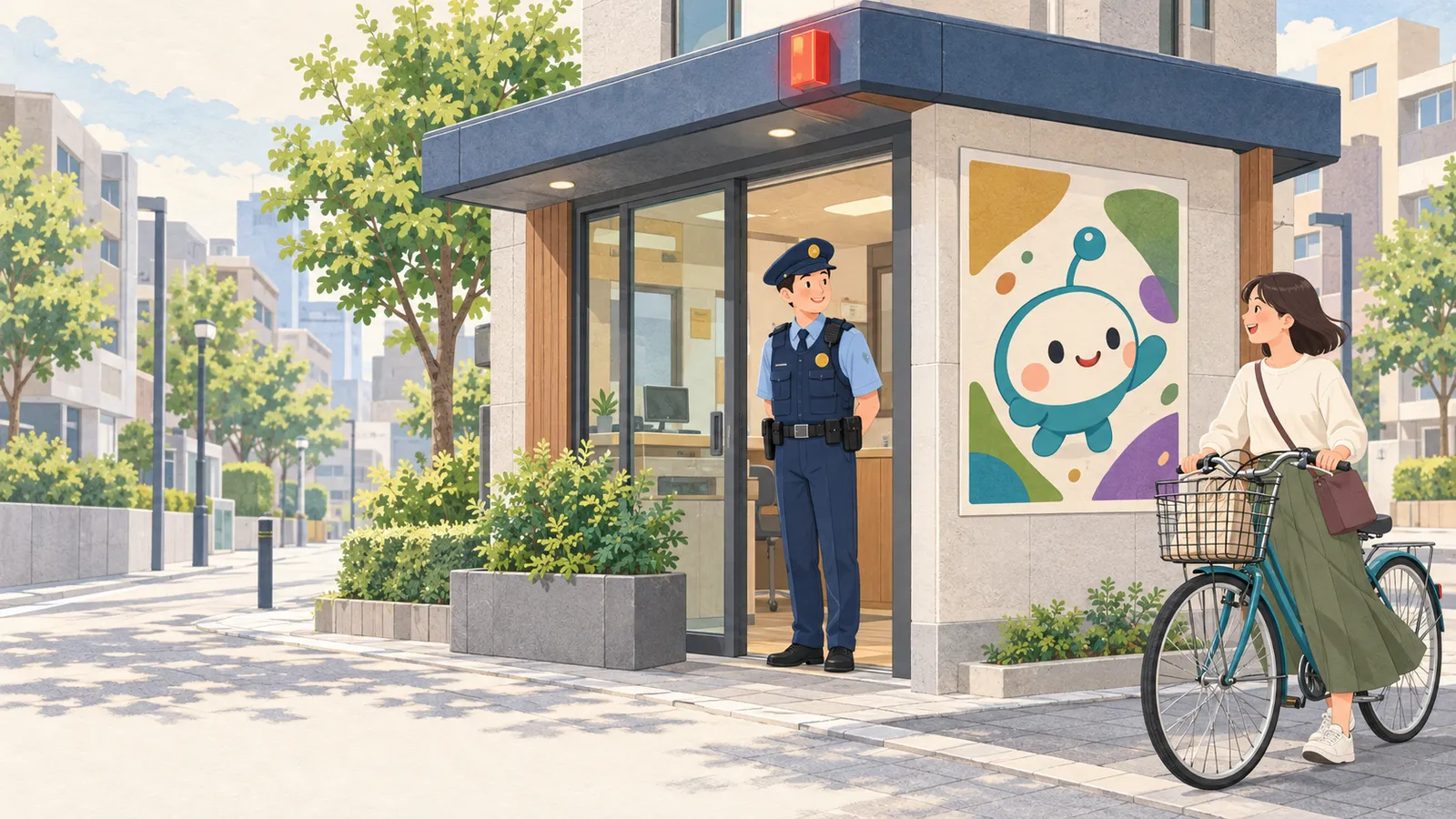
In Tokyo, the face on the police poster is a small cartoon creature made from the cutest parts of several animals, with a little antenna on its head. Its name is Pipo-kun (“-kun” is a friendly ending Japanese adds to boys’ names), from “people” and “police”, and it has been the mascot of Tokyo’s police since 1987. Even its body parts have a job: the ears are for listening to the people of Tokyo, the antenna picks up what is going on in society, and the eyes keep watch over every corner.
Pipo-kun is not an oddity. Japan is divided into forty-seven prefectures, a bit like states or counties, and every one of their police forces has a mascot. Japan’s national police even keep a page showing them all. So do towns, and even the military has tried looking cute. Why would the people in charge of serious things want to look like this? The short answer is that in Japan, cute is a way of saying “you don’t need to be on your guard with us”. The longer answer goes back to what the word kawaii first meant.
Cuteness as a way of saying “don’t worry”
Think about what a police force actually wants to say to most people most of the time. Lock your bike. Watch out for phone scams. Call us if something is wrong. None of it is an accusation, but a stern officer on a poster can make it feel like one.
A cute character changes the tone before a single word is read. It says: we are on your side, this is friendly advice, there is no need to tense up. When Japanese local governments explain why they make mascots, the official reasons are exactly these: to soften a stiff, bureaucratic image, and to help residents feel close to the people who serve them.
It fits a wider habit in Japanese daily life of asking gently. Even a simple request at a counter often begins with something like “sorry to trouble you, but…”. (More on that habit in why everyday life in Japan runs on so many small courtesies.) A mascot is the same gentleness, turned into a picture.
The army is the hardest test. Japan’s military is called the Self-Defense Forces, and in 2010 its recruiting office in Tokushima Prefecture, on the island of Shikoku, put up a recruitment poster drawn like a Japanese cartoon, showing a young woman in an Air Self-Defense Force uniform. A well-known animation studio drew it. The goal was simple: a poster that high school and university students would actually want on their bedroom wall. Even an organisation built for defence decided that the way to reach young people was to look like the cartoons they already loved.
Where the taste comes from
So where does this trust in cuteness come from? There are two main answers, and people still argue about how much each one counts.
The first is modern: cute became a business. You probably know the white cat with a bow, Hello Kitty, designed by the Japanese company Sanrio in 1974. She has no mouth, and Sanrio’s own explanation is that kindness is shown by what you do, not just by what you say. A character who cannot speak can only be kind in that way. Characters like her became everyday goods in Japan: pencil cases, mugs, bags.
The second answer is much older. Japanese folklore is crowded with spirits and creatures that have faces, moods and personalities (see how Japan tells a god from a monster). In old stories, a fox, a river or even a worn-out umbrella can turn out to have a personality of its own. One way to read today’s mascots is that a culture used to giving the world around it small faces finds it natural to give one to a police force. Others see the mascots as mostly marketing. Both views have their defenders.
When towns started building costumes
The real explosion came from towns. In 2007, the city of Hikone held a festival for the 400th anniversary of its castle, and its mascot, a white cat in a samurai helmet called Hikonyan, became a national favourite. Suddenly every town wanted a character in a big, soft costume, waving at festivals.
They even got a name: yuru-kyara, roughly “laid-back characters”. The appeal is that they are a little clumsy and homemade. A national contest for them was held ten times, and in its busiest year, 2015, more than 1,700 characters entered.
The most famous of them is Kumamon, a black bear with round red cheeks, introduced by Kumamoto Prefecture in 2010. The prefecture gave him a job title, “sales manager”, and later a second one, “manager of happiness”. It also made an unusual choice: businesses could put Kumamon on their products for free, as long as they asked permission first. Within a few years, Kumamon goods were selling tens of billions of yen a year, hundreds of millions of dollars. A bear had become the face of a whole region.
Not everyone is charmed. One Japanese columnist argues that, for a town hall, a mascot is also a safe way to spend the year’s budget and fill space in the local newsletter.
Cute, and a little sad
If you look at enough of these characters, there is sometimes something faintly sad about them, small and soft and a little helpless. That fits the history of the word. The word kawaii itself started out somewhere quite different from “cute”.
Its oldest ancestor, a word built on the word for “face”, meant embarrassed or awkward. In the Middle Ages the word shifted to “pitiful”, the feeling you have for someone small and in trouble. Only later did that pity for the weak turn into “lovable” and “dear”, and the old sense of “poor thing” faded away.
So in Japanese, cute and sad were never far apart. For centuries, the feeling behind the word was the urge to look after something small and a little helpless. That helps explain why a mascot works so well on a police poster. Instead of standing over you, the police show up as something you might want to protect. Next time you see one in Japan, notice that the round-eyed creature asking you to lock your bike looks as if it could use a bit of looking after itself.