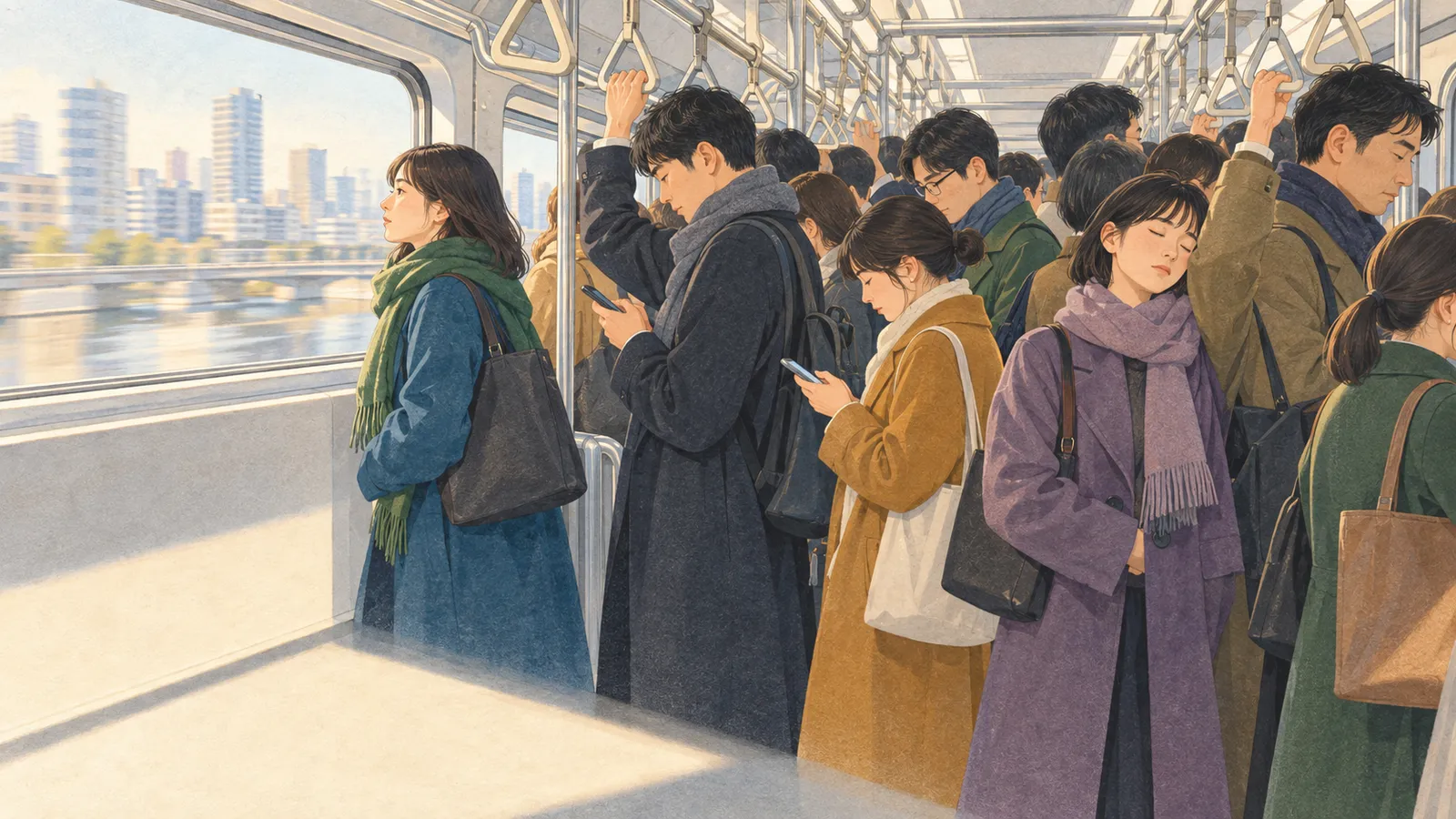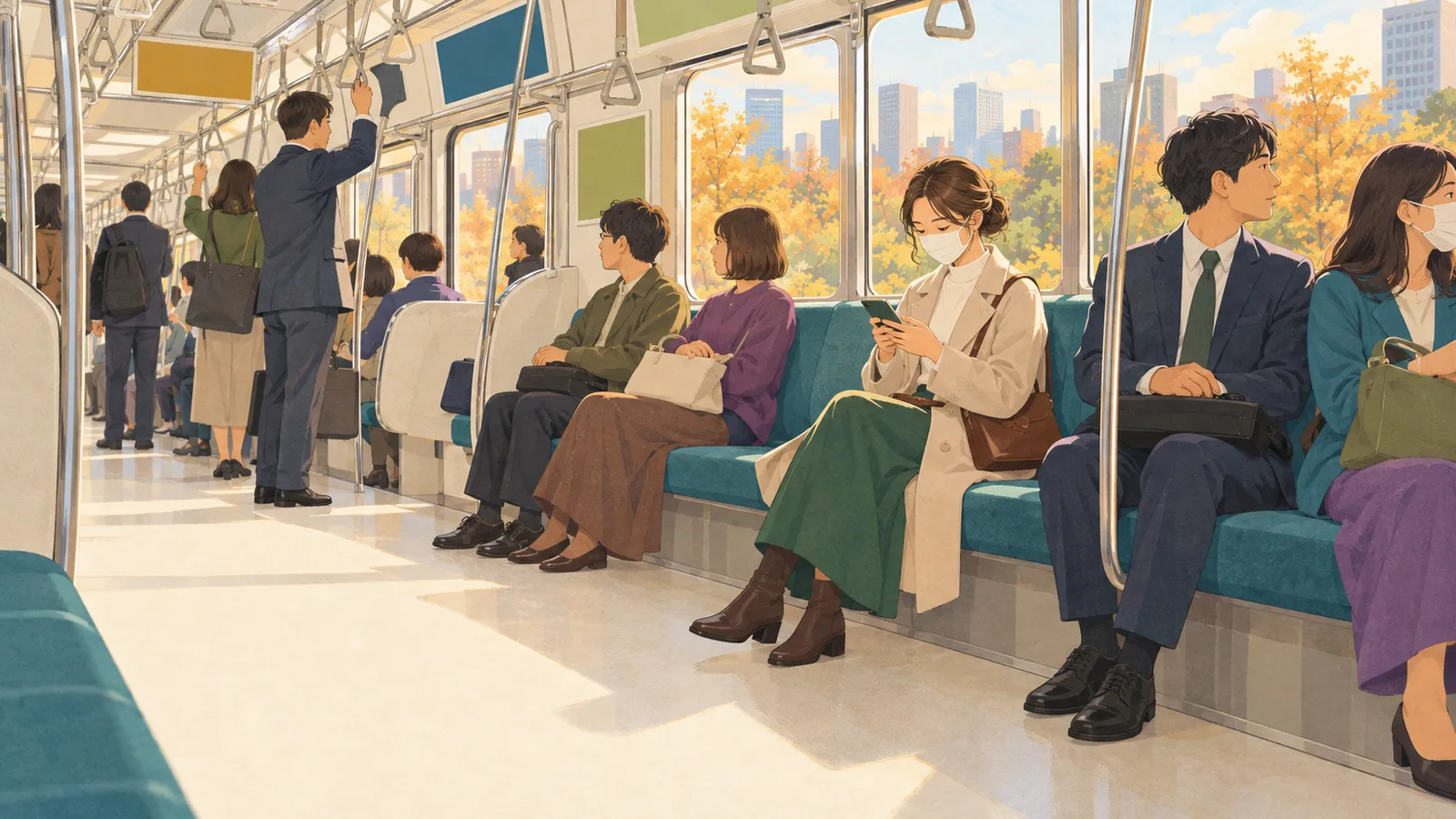
Picture a morning train in Tokyo. The woman across from you is reading her phone. She isn’t coughing, she isn’t sneezing, she looks perfectly well. And she is wearing a white paper mask.
If you come from a place where masks mostly came and went with the pandemic, the guesses come quickly. Is the air bad? Is she afraid of catching something? Sometimes it is one of those. But ask people in Japan why they wear one on an ordinary day, and you get a whole list of answers, some of them nothing to do with germs. One of them is surprisingly simple: “I didn’t do my makeup today.”
The reasons you would expect
The first reason is the one most visitors never guess, because it is about protecting other people, not yourself. Many people put on a mask when they have a cold so that they don’t pass it on. Japan’s health ministry teaches this as cough etiquette: when you cough or sneeze, cover your mouth and nose with a mask, a tissue or your sleeve. Children learn it at school, and plenty of adults keep doing it at work. Going into the office with a sniffle and a mask is, for many people, the considerate thing to do.
The second is hay fever. Every spring, pollen from Japan’s huge cedar plantations fills the air, and a mask is the easiest way to keep some of it out of your nose. So the same white mask can mean “I have a cold” in January and “my eyes are streaming” in March.
You could stop there. But neither of those explains the woman on the train, who has no cold and no pollen to worry about in autumn.
The mask that is just for show
Japanese has a word for what she is wearing. A mask worn when you are not ill is often called a date masuku. Here date is said “dah-teh”, and it means “for show”. Glasses with plain lenses, worn only for the look, are date megane, “show glasses”. A date mask, then, is a mask that is not doing a mask’s job.
So what is it doing? When the beauty site oriconME surveyed 300 women in their teens and twenties, about one in three said they had worn a mask just for show. Their two most common reasons were “I don’t have to put on makeup” and “I don’t want people to see my bare face.” A mask is a quick way to look “done” without doing anything.
When LINE Research asked people about masks in May 2023, the most common reason by far was not wanting to catch anything. But among teenagers, two other answers ranked high: “it’s embarrassing, I don’t want my face seen” and “I worry about how people around me will look at me.”
A wall you can wear
That last answer points to something more than makeup. Yuzo Kikumoto, who wrote a whole book back in 2011 about people who find it hard to take their masks off, puts it simply: the mask works like a wall between you and everyone else. Behind it, nobody can read your expression, and you feel a little safer from other people’s eyes. The people who lean on it most, he says, tend to be the ones who think of themselves as easily hurt.
In Japan, a lot of everyday life involves quietly reading the mood of the room: who looks annoyed, who looks bored, what nobody is saying out loud. Our piece on reading the air goes into why. If you spend the day watching other people’s faces, it can be a relief to know that yours is half out of view. Not everyone who wears a date mask feels this way, and plenty would just say it’s comfortable. But for some people, it works less like medical gear and more like a spare face they put on before leaving the house.
Not everyone wears one
None of this means that everyone in Japan masks up. When Japan eased its pandemic advice on March 13, 2023, the government’s line became that wearing a mask is up to you. It still suggests one in a few places, such as a hospital visit or a packed train, but that is advice, not a rule. Many people took theirs off. In the LINE survey that spring, around four in ten said they still always wore one when going out, which also means most did not.
So when you see that woman on the train again, the honest answer is that you can’t tell from the outside. She might have a cold she doesn’t want to give you. She might be fighting off the pollen. Or she might just not have done her makeup this morning, and the mask means she doesn’t have to think about it.