You sit down in a small bar in Tokyo, order two beers, and a little bowl of something you did not ask for arrives. Later it is on the bill. Outside, on the station escalator, everyone is standing in a neat line on the left while people in a hurry walk up the right. Nobody told you about either of these.
Japan runs on a lot of small rules like that. Almost none of them are laws, and nobody expects a visitor to know them all. But knowing them makes a trip smoother, and most have a simple reason behind them. Here are the ones you are most likely to meet, with what people actually do and why. We update this guide every year.
Eating out
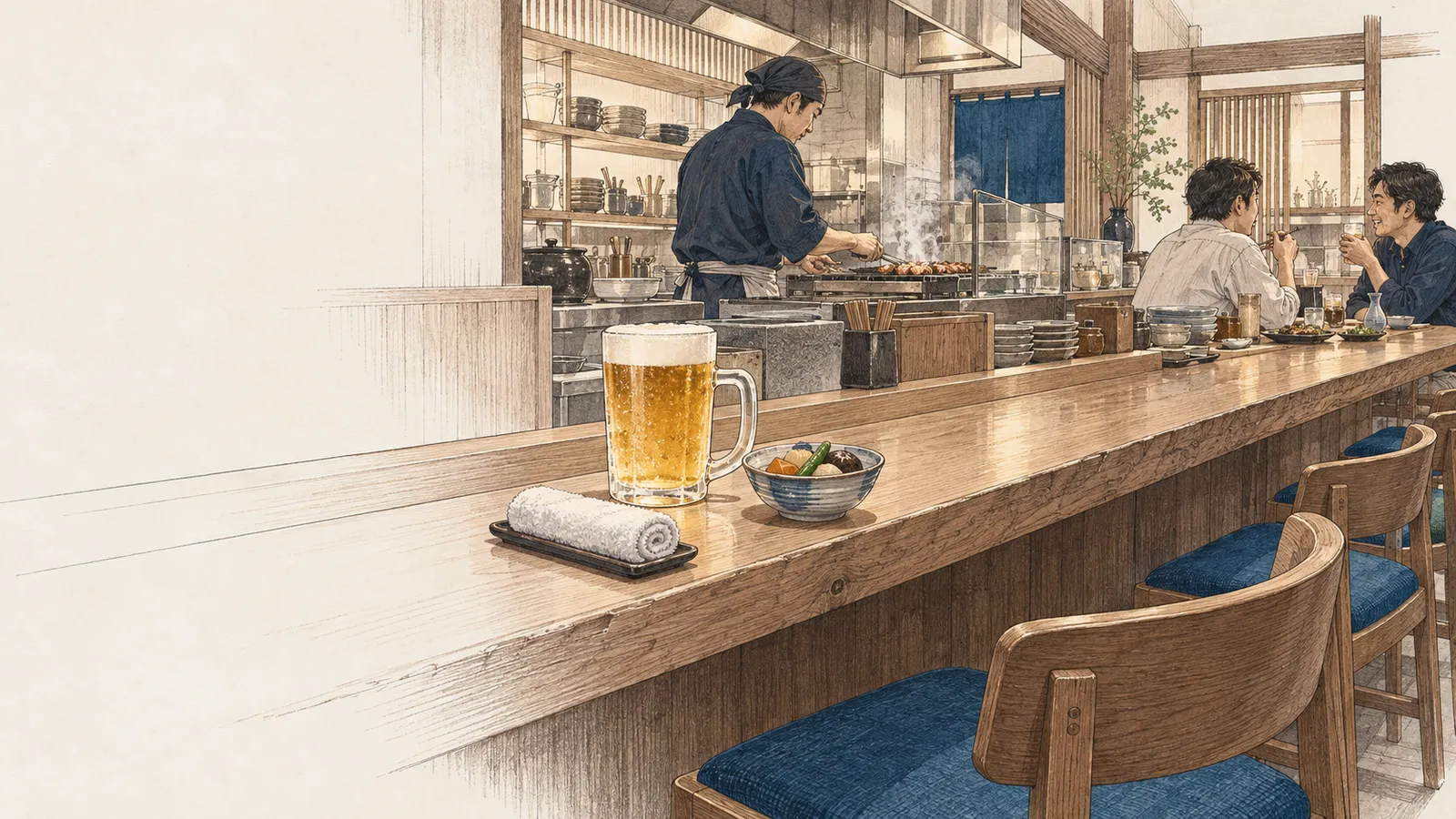
The wet towel is for your hands. Many restaurants hand you a small damp towel, called an oshibori, when you sit down. People wipe their hands with it before eating, then fold it and leave it on the table. It is not for your face.
A small dish you did not order will arrive, and it is on the bill. In an izakaya, a casual Japanese pub, a little starter called otoshi comes soon after you sit down. Think of it as a table charge that you can eat, usually a few hundred yen. It is simply part of going to an izakaya.
Do not tip. Good service is part of the price.
Call staff with a raised hand and “sumimasen”. Sumimasen means “excuse me”. People lift a hand and say it clearly, or press the call button on the table if there is one.
Pay at the register, not at the table. The bill is usually left on your table. When you are done, take it to the cashier by the door.
Gathering your empty plates is a nice touch. You do not have to, but in casual places many people move their finished plates and bowls to the edge of the table, where staff can reach them easily. Piling them up is best left to the staff, who have their own way of stacking.
Slurping noodles is fine. For ramen and soba it is normal. The noodles are eaten hot, and slurping cools them on the way in.
Before eating, people say “itadakimasu”. It means roughly “I humbly receive”, and it is a thank-you for the food and for everyone who brought it to the table. You will hear it at home and in restaurants.
Two things not to do with chopsticks. Do not stand them upright in a bowl of rice, and do not hand a piece of food straight from your chopsticks into someone else’s chopsticks, with two pairs holding the same piece. Both are things people do at funerals: a bowl of rice with chopsticks standing in it is offered to the dead, and after a cremation, family members pass the bones from chopsticks to chopsticks. Rest your chopsticks across the bowl or on the holder. Serving food onto someone’s plate is perfectly normal; just set it down on the plate rather than into their chopsticks.
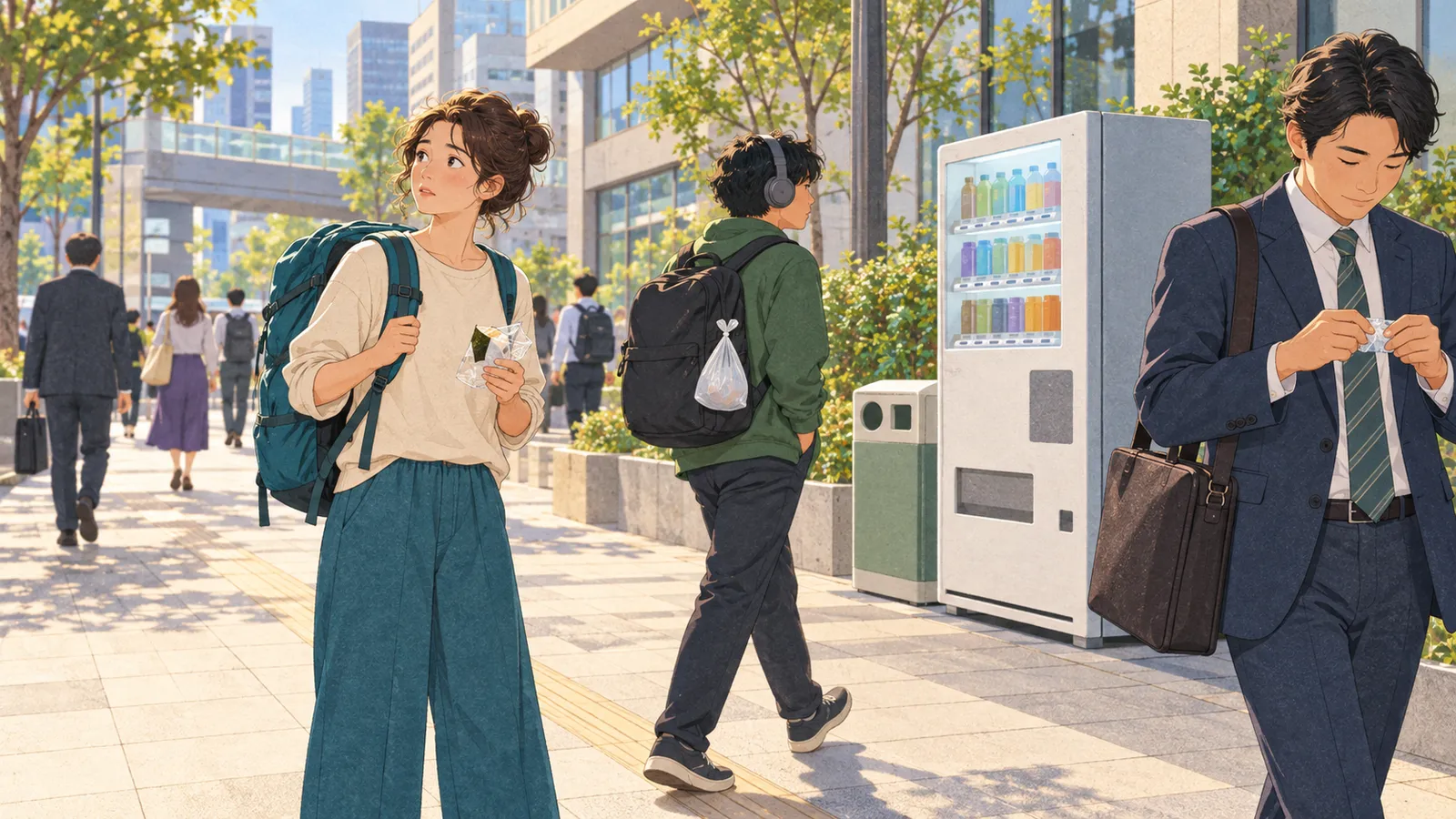
Eat where you bought it. People usually finish a snack at the stall, or a drink next to the vending machine, rather than walking along with it. Some busy markets ask for this outright.
Trains and streets
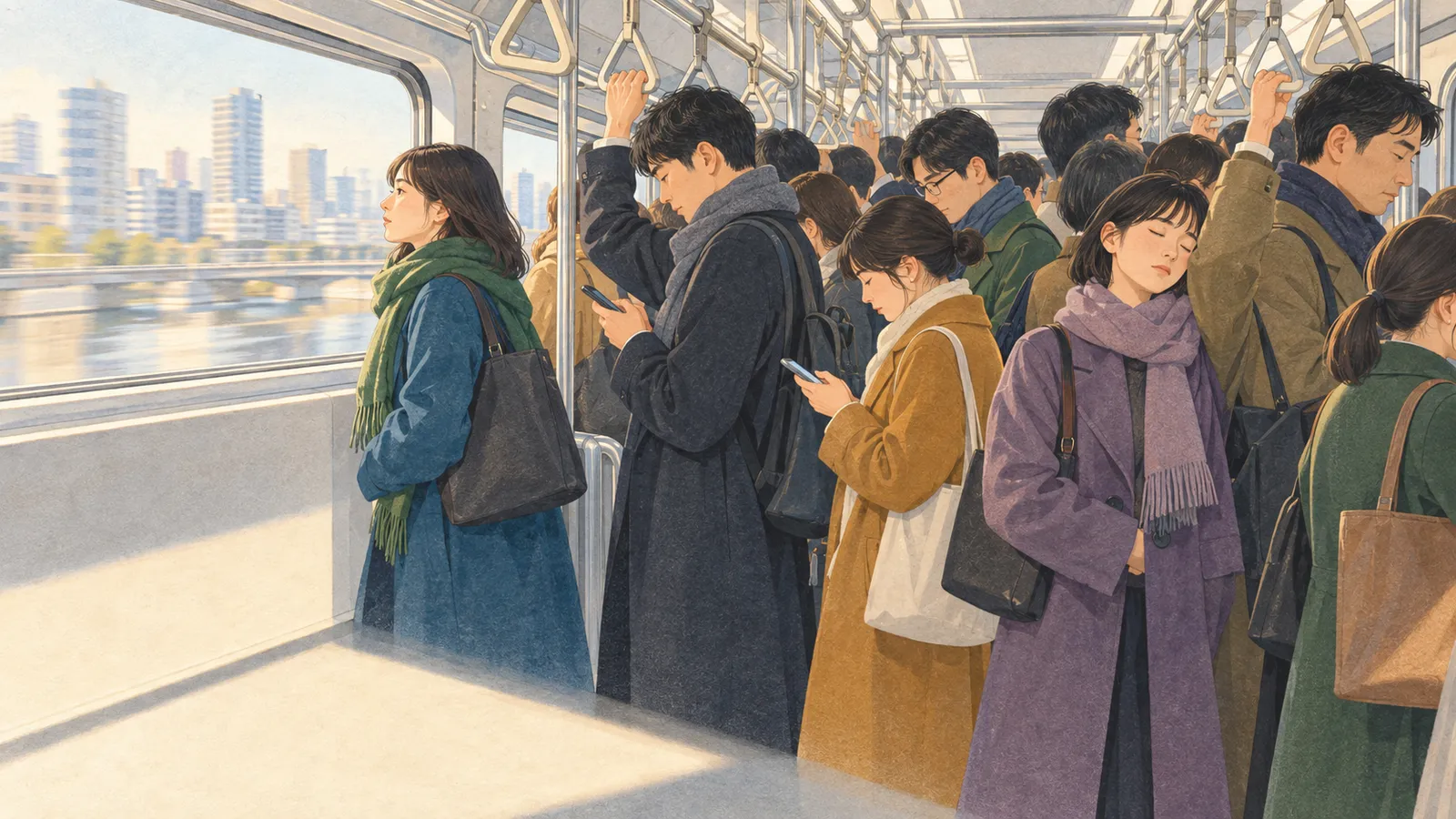
Keep your voice low, and do not take calls on the train. Most carriages are quiet. People text, read or sleep. If the phone rings, they let it go or answer it after getting off.
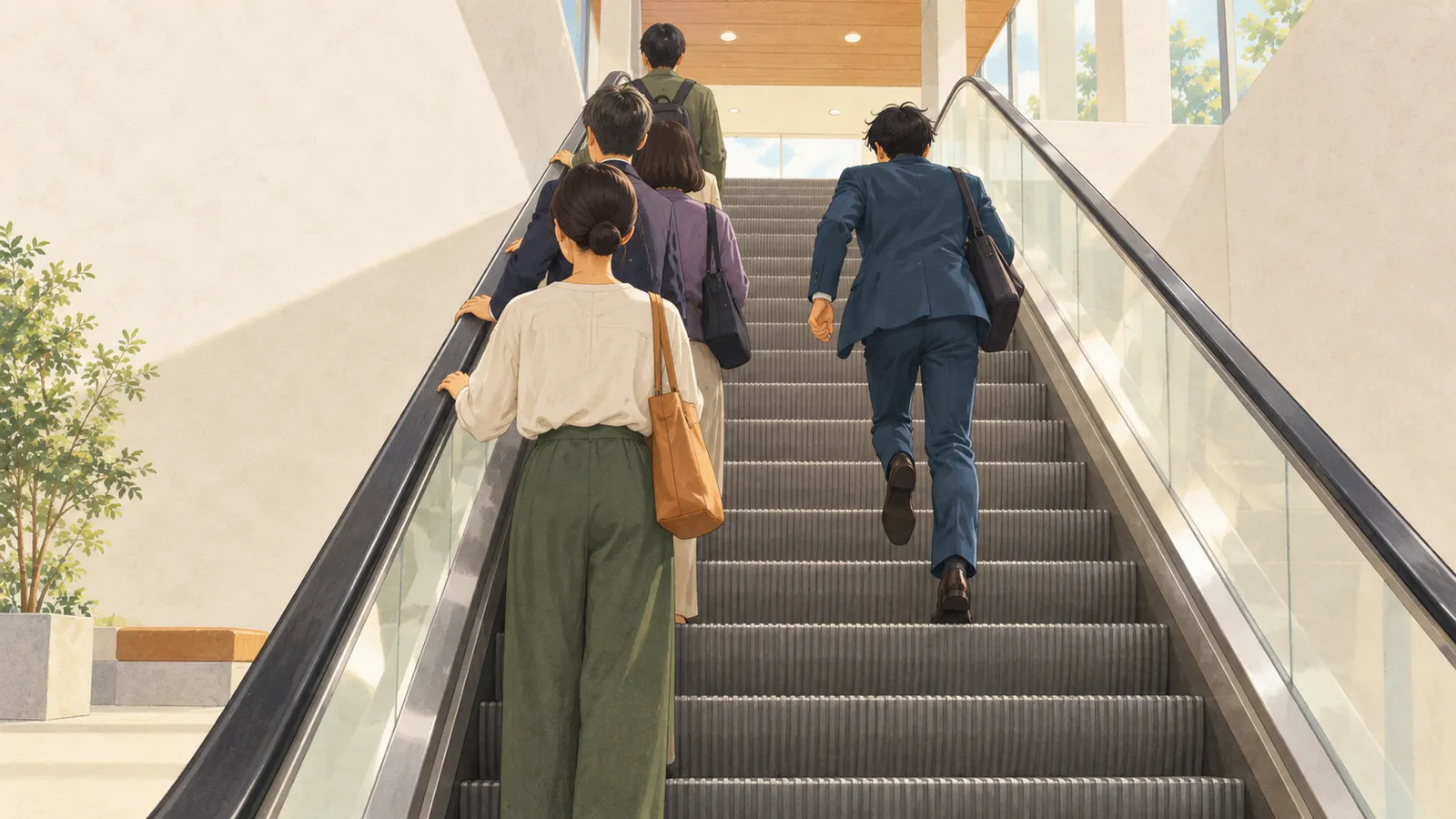
On escalators, stand on one side and leave the other free. In the Tokyo area people stand on the left. In the Osaka area they stand on the right. The free side is for people running for a train. Just do what the people in front of you do.
Wait in line on the platform. Marks on the platform show where each door will stop. People line up there and let everyone off before getting on.
In a crowded train, take your backpack off your back. Hold it in front of you or by your feet, or put it on the rack above the seats. A bag on your back keeps bumping the person behind you.
Carry your rubbish home. Public bins are hard to find on the street. Many were taken away after the 1995 sarin gas attack on the Tokyo subway, and more were removed in later years for security. People keep a small bag for rubbish.
Smoke only where you see a smoking area. Many city centres ban smoking on the street, so people do not smoke while walking. Smokers gather at marked smoking spots, often a small area near a station.
Shops and service
Put your money on the small tray. At most registers there is a little tray. You put your cash or card on it rather than into the cashier’s hand, and your change comes back on it.
You do not have to answer “irasshaimase”. When you walk into a shop, staff call out “irasshaimase”, which means “welcome”. It is a greeting to everyone who comes in, not a question, so most customers say nothing. A small nod is plenty.
Join the line. Outside a popular ramen shop, at a ticket machine, at a bus stop: people form a line and wait. Walking to the front, even to ask a question, will get looks.
Homes and hot springs
Take your shoes off at the door. Homes, traditional inns and some restaurants have a step just inside the entrance. Shoes stay below it, and you step up in your socks or in the slippers you are given. Floors inside are kept clean because people sit on them.
Toilets have their own slippers. In homes and inns, a separate pair often waits at the toilet door. Change into them inside, and remember to change back when you come out.
At an onsen, wash before you get in, and keep your towel out of the water. An onsen is a hot spring bath, shared with other people. Before getting in, rinse yourself well with hot water at the washing area. The bath is only for soaking. The small towel stays on the side or goes on your head.
If you are invited to someone’s home, bring a small gift. Sweets or something to eat are usual, and it does not need to be expensive. It thanks your host for having you.
Work
Arrive about five minutes early. Trains in Japan run to the minute, and people expect the same of each other. Arriving at the exact time can already feel a little late, so people aim to be a few minutes ahead.
Take a business card with both hands. In a business meeting people exchange cards, called meishi. Take the card with both hands and set it on the table in front of you while you talk. Putting it away straight away looks careless.
Most of these come down to one idea: make things a little easier for the people around you.