Most of us learned the same rule as children: eat quietly. Don’t slurp your soup. Close your mouth when you chew.
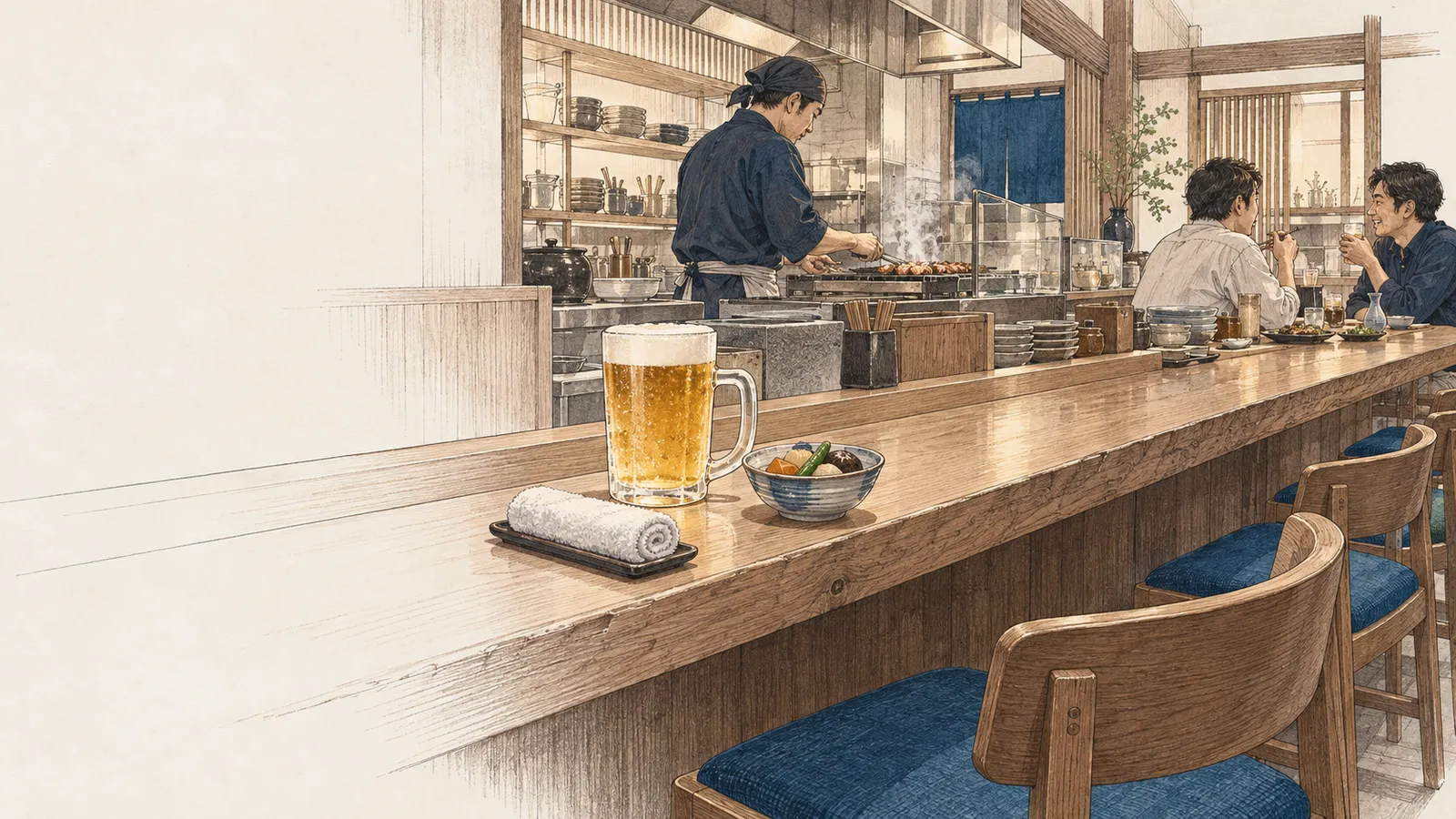
Then you sit down at a noodle counter in Japan, and the whole room is slurping. The office worker on your left. The grandmother on your right. Nobody looks up.
So is it really fine there? Yes, with noodles. The reason is simpler than most visitors expect: slurping isn’t a special rule of politeness. It’s the way noodles taste best, and over time it simply became the normal way to eat them.
Why people slurp
Ask people in Japan why they slurp, and the answers usually come down to three things.
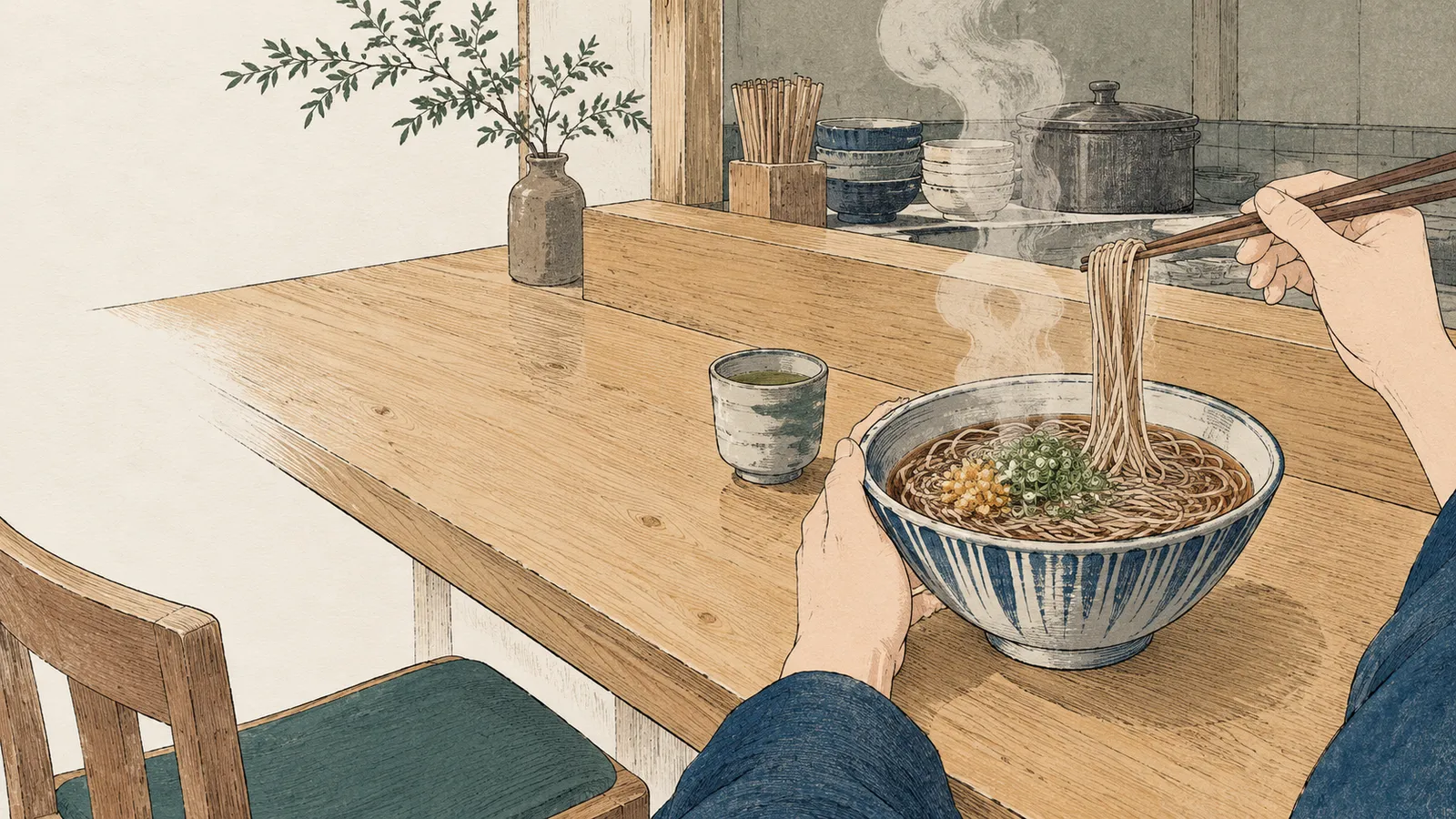
The noodles are hot. Ramen and soba often come out steaming, and you are meant to eat them before they go soft. Pulling them in with a rush of air helps cool each mouthful on the way in.
The broth comes with them. Slurping draws up the soup that clings to the noodles, so you get both in one bite.
The smell. This one matters most with soba, the thin buckwheat noodles. A soba shop owner, asked about slurping, put it simply: soba was always meant to be enjoyed for its aroma, and slurping is how you get it. You breathe in as you eat, and the scent comes with it. A fashion model, defending the habit on Japanese TV, even compared it to tasting wine.
Some people take this very seriously. One well-known Japanese writer, Shiina Makoto, once tried eating his noodles without slurping, just to see. His verdict: they were less than half as good.
Plenty of people never think about it, though. When the Shin-Yokohama Ramen Museum asked people why they slurp, the most common answer was simply that they didn’t know. Next came “it tastes better with the soup” and “the noodles cool down and are easier to eat”.
Where it came from
Why noodles, and why Japan? Nobody can say for sure how the habit began, but one idea you hear in Japan points to Edo, the old name for Tokyo, where soba was sold from street stalls and eaten quickly, on the way somewhere. Eating in a hurry, the thinking goes, you don’t sip delicately; you pull the noodles in. It’s a guess, not proven history. Either way, slurping has been part of eating soba for a long time.
Is it ever rude?
With anything other than noodles, yes. The sound is fine for noodles, not for food in general: slurping a soup or chewing loudly at dinner is no more polite in Japan than anywhere else. The noodle bowl is the exception, not a free pass. It’s one of the many unwritten rules of eating in Japan.
Not everyone loves the sound, either. In the autumn of 2016, people on Twitter argued that slurping could upset visitors from abroad, and a new word appeared, made from the English words “noodle” and “harassment”: nūhara. TV shows picked it up. Others pushed back, including the fashion model who had compared slurping to wine tasting, and the fuss soon died down.
And plenty of visitors never slurp. In the same museum survey, visitors from abroad who didn’t slurp said they thought it was bad manners, worried about splashing their clothes, or simply didn’t know how.
Back at the counter
So when the whole counter is slurping, nobody is breaking the rule you grew up with. They are eating noodles the way noodles there are meant to be eaten: hot, with the broth, and with the smell of buckwheat coming through.
Next time a bowl of soba is put in front of you, try one slurp and notice what changes. The soba shop owner from earlier would say that is the whole point.